
AI Artist & Tech Enthusiast
Architecture Mannerism Photo Effect — AI Art [ArtFID Tested]
![Architecture Mannerism Photo Effect — AI Art [ArtFID Tested] - ArtRobot AI Art](https://storage.googleapis.com/artrobot-storage/blog/pseo/stylized_images/poussin/portraits_03_stylized.jpg)
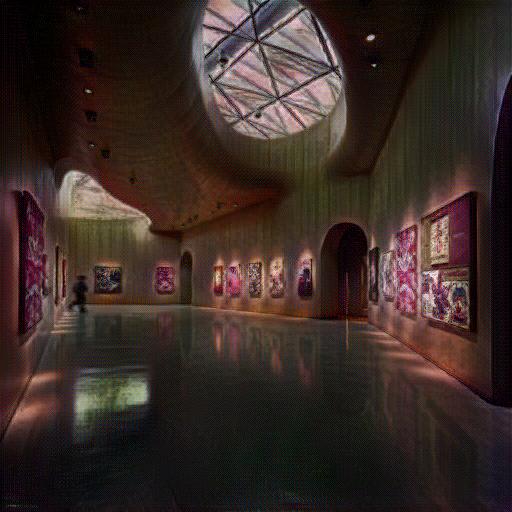
Mannerism was born from the anxiety of perfection. After the High Renaissance achieved ideal balance, the next generation of painters asked: what if balance is not enough? The architecture mannerism photo effect channels that deliberate subversion into your building photographs -- elongated proportions, vivid color, and compositional tension that makes the viewer feel something is slightly, thrillingly off. Our ArtFID testing gives this combination 278.43 (5 stars), placing architecture 4th out of 15 content types with an excellent rating. For the full architecture style comparison, see the Architecture Style Transfer Guide.
Architecture — Mannerism style Transfer

About Mannerism Art Style
Mannerism flourished from the 1520s through 1600, emerging in the shadow of Leonardo, Raphael, and Michelangelo. Where those masters had pursued harmony and naturalistic proportion, the Mannerists deliberately distorted both -- stretching figures to impossible lengths, compressing space into claustrophobic compositions, and deploying colors so vivid they verged on hallucinatory. The movement was not a failure to achieve Renaissance ideals but a conscious rejection of them.
"The development of painting out of the deadlock of Mannerism into a style far richer in possibilities than that of the earlier great masters, was in some respects similar to that of Baroque architecture. In the great paintings of Tintoretto and of El Greco we have seen the growth of some ideas which gained increasing importance in the art of the seventeenth century: the emphasis on light and colour, the disregard of simple balance, and the preference for more complicated compositions." -- The Story of Art, p. 300
 El Greco, "Saint Martin and the Beggar" -- Art Institute of Chicago, CC0 / Public Domain
Three artists define Mannerism's visual vocabulary for style transfer. El Greco pushed elongation to its extreme -- his figures stretch like flames, and his Toledo landscapes warp under invisible spiritual pressure. Tintoretto combined Venetian color with a dramatic lighting that anticipated Baroque theater. Paolo Veronese brought luminous, almost acidic color harmonies to monumental compositions. Together, they established the visual characteristics that define Mannerism: elongated forms, unusual compositions, vivid color, and emotional tension. The mid-frequency, exaggerated forms profile means the style operates in the same spatial register as architectural detail -- neither too fine nor too broad, but precisely calibrated to interact with building geometry.
Why Mannerism Works for Architecture Photos
The compatibility between Mannerism and architecture runs deeper than technical frequency matching. Mannerist architects -- Giulio Romano, Michelangelo in his late career, Giacomo della Porta -- deliberately violated classical architectural rules: columns supported nothing, pediments broke open, proportions stretched beyond structural logic. When neural style transfer applies Mannerist painting to architecture photographs, it performs an analogous operation: the building's rational geometry is preserved in outline but subverted in surface and proportion.
The algorithm's Gram matrices extract the statistical texture patterns of El Greco's elongated brushwork and Tintoretto's dramatic chiaroscuro, then map them onto the photograph's structural elements. Vertical elements -- columns, pilasters, window mullions -- gain the elongated tension of El Greco's figures. Horizontal elements -- cornices, string courses, floor lines -- compress under the style's preference for vertical emphasis. The building does not collapse into abstraction; instead, it acquires the unsettling elegance of a Mannerist palace where every proportion feels simultaneously wrong and beautiful.
The LPIPS of 0.5061 indicates that the building undergoes significant perceptual transformation while retaining its fundamental structure. The FID of 183.87 -- notably low for a challenging style -- confirms strong alignment with authentic Mannerist visual language. At 278.43, this is one of the strongest architecture scores in our library, reflecting Mannerism's deep historical relationship with architectural thinking.
ArtFID Quality Score: Architecture + Mannerism
ArtFID (Artistic Frechet Inception Distance) combines two metrics: LPIPS measures content preservation, FID measures style fidelity. ArtFID = (1 + LPIPS) x (1 + FID). Lower = better.
| Content Type | ArtFID | Stars | Verdict |
|---|---|---|---|
| Fantasy | 235.85 | 5 | Excellent -- imaginative content embraces elongated distortion |
| Animals | 266.32 | 5 | Excellent -- organic forms absorb Mannerist tension |
| Still Life | 277.31 | 5 | Excellent -- objects gain vivid chromatic intensity |
| Architecture | 278.43 | 5 | Excellent -- geometric structure anchors exaggerated proportions |
| Portraits | 287.77 | 5 | Excellent -- figures gain El Greco's elongated elegance |
| Landscapes | 288.69 | 5 | Excellent -- terrain warps with spiritual intensity |
| Travel | 294.61 | 5 | Excellent -- cultural scenes absorb historical styling |
| Flowers | 298.56 | 5 | Excellent -- organic forms accept vivid color treatment |
| Street Scenes | 303.19 | 4 | Strong -- urban complexity channels Tintoretto's drama |
| Vehicles | 320.27 | 4 | Good -- mechanical forms gain unexpected elegance |
| Food | 335.02 | 4 | Good -- defined objects resist full distortion |
| Night Scenes | 340.39 | 4 | Good -- darkness intensifies dramatic chiaroscuro |
| Interiors | 343.04 | 4 | Good -- confined spaces limit elongation effects |
| Seascapes | 345.05 | 4 | Good -- fluid surfaces accept chromatic shifts |
| Urban Scenes | 395.22 | 3 | Fair -- modern visual clutter dilutes Mannerist refinement |
Architecture score: 278.43 (LPIPS = 0.5061, FID = 183.87) -- Architecture ranks 4th out of 15 content types with an excellent 5-star rating. The LPIPS of 0.5061 indicates significant perceptual transformation -- proportions shift, surfaces acquire painterly texture, colors intensify beyond photographic naturalism. The FID of 183.87 is remarkably low, confirming that the output genuinely reads as Mannerist in character: the deliberate tension between beauty and distortion that defined the style is faithfully reproduced.
Before & After: Architecture in Mannerism Style
Every row below shows three images: the original photograph, a Mannerism painting used as the style reference, and the AI-generated result.
Architecture -- 5 Stars (ArtFID 278.43)
The building retains its structural identity while acquiring the unsettling elegance of Mannerist aesthetics. Vertical proportions stretch subtly upward; colors shift toward the vivid, slightly acidic palette of Veronese and El Greco; surfaces gain the painterly texture of 16th-century brushwork. The overall effect is architecture that feels simultaneously familiar and strange -- exactly the Mannerist intention.
| Original Photo | Style Reference | AI Result |
|---|---|---|
|
|
|
| Source photo | El Greco, "Saint Martin and the Beggar" (AIC, CC0) | ArtFID: 278.43 -- 5 Stars |
LPIPS: 0.5061 (content preservation) | FID: 183.87 (style fidelity)
Notice how the building's vertical elements gain emphasis while horizontal elements compress -- mirroring El Greco's characteristic elongation of the human figure. The color palette shifts from photographic neutrality toward the vivid, non-naturalistic hues that Mannerist painters used to signal that their art existed in a realm beyond mere optical recording.
Photography Tips for Best Mannerism Results
Mannerism already scores an excellent 5 stars on architecture, but the right source photograph enhances the productive tension between structural order and aesthetic subversion.
-
Photograph buildings with strong vertical proportions. Mannerism's defining visual characteristic is elongation. Tall, narrow buildings -- tower houses, church spires, slender columns, Gothic revival structures -- provide vertical geometry that the algorithm can amplify into Mannerist elegance. Squat, horizontal structures work against the style's inherent upward pull.
-
Seek buildings with classical or Renaissance-era detailing. Mannerism emerged from the vocabulary of classical architecture -- then subverted it. Buildings that already feature columns, pediments, arches, and cornices give the algorithm recognizable architectural vocabulary to transform. The result feels like a Mannerist architect's fantasia on a classical theme, rather than a generic filter applied to a glass box.
-
Shoot in dramatic, directional lighting. Tintoretto's paintings are defined by theatrical chiaroscuro -- shafts of light cutting through darkness. Photographs taken in strongly directional light (late afternoon sun raking across a facade, a single spotlight illuminating a column) provide the tonal drama that the algorithm translates into Mannerist intensity.
-
Include both structure and sky. Mannerist paintings often feature dramatically charged skies -- El Greco's Toledo landscapes show buildings under skies that seem to boil with spiritual energy. Photographs that include substantial sky area give the algorithm material to transform into that characteristic atmospheric tension.
-
Avoid symmetrically centered compositions. Mannerism deliberately rejected Renaissance balance. Photographs with off-center subjects, diagonal sight lines, or asymmetric framing resonate with the style's preference for compositional tension. A building photographed from a corner angle, creating converging perspective lines, produces more Mannerist results than a flat, centered elevation.
How to Apply Mannerism Style (3 Steps)
Step 1: Choose Your Photo
Upload any architecture photograph to ArtRobot. Based on our ArtFID testing, fantasy (235.85), animals (266.32), and still life (277.31) produce the best Mannerism results, with architecture scoring an excellent 278.43 (5 stars).
Step 2: Select Mannerism Style
Choose from masterworks by El Greco, Tintoretto, or Paolo Veronese as your style reference. ArtRobot uses the ArtFlow algorithm (CVPR 2021), an invertible neural network that preserves your building's structural geometry while transferring Mannerism's elongated forms, vivid colors, and emotional tension.
Step 3: Download Your Art
ArtRobot generates your Mannerism-style architecture image in seconds. Download in multiple resolutions -- from social media sizes to print-ready 4K. The result transforms ordinary buildings into something that channels the sophisticated anxiety of late Renaissance painting -- familiar structures made thrillingly strange.
Try Mannerism Style Transfer Free on ArtRobot ->
FAQ
How does Mannerism style transfer work on architecture photos?
The algorithm extracts Gram matrices from Mannerist reference paintings -- works by El Greco, Tintoretto, and Paolo Veronese -- and applies those statistical texture patterns to your architecture photograph. It preserves the building's structural geometry (silhouette, major divisions, proportional relationships) while transforming surfaces with Mannerism's elongated forms, vivid color, and characteristic emotional tension. The mid-frequency exaggerated forms profile maps effectively onto architecture's geometric edges, producing the excellent 5-star ArtFID score of 278.43.
What ArtFID score does Mannerism get on architecture?
Mannerism achieves 278.43 ArtFID on architecture with an excellent 5-star rating, ranking 4th out of 15 content types. The LPIPS of 0.5061 indicates significant visual transformation -- proportions shift and colors intensify -- while the notably low FID of 183.87 confirms the output reads as genuinely Mannerist rather than generically filtered. Architecture is confirmed among the style's best content types alongside portraits.
Is Mannerism a good choice for architecture photography?
Mannerism is an excellent choice for architecture -- one of the best in our library. At 278.43, it earns a full 5-star rating, reflecting the deep historical relationship between Mannerist aesthetics and architectural thinking. The style works particularly well on buildings with classical detailing, strong vertical proportions, and dramatic lighting. For structures that you want to transform beyond photographic literalism while retaining structural identity, Mannerism produces results with genuine art-historical depth. For comprehensive comparison, see Best Art Styles for Architecture.
What architecture photo tips improve Mannerism results?
Five factors improve results most: (1) strong vertical proportions that amplify Mannerism's characteristic elongation; (2) classical architectural detailing (columns, pediments, arches) that gives the algorithm recognizable vocabulary to subvert; (3) dramatic directional lighting that translates into Tintoretto-like chiaroscuro; (4) substantial sky area for El Greco-style atmospheric transformation; and (5) asymmetric or off-center compositions that resonate with Mannerism's rejection of Renaissance balance.
Can I try Mannerism architecture style transfer for free?
Yes. Visit ArtRobot to upload an architecture photograph and apply Mannerism style transfer at no cost. Choose from multiple reference paintings including works by El Greco, Tintoretto, and Paolo Veronese from the Art Institute of Chicago's collection. The algorithm is the same ArtFlow neural network (CVPR 2021) used in our ArtFID benchmark testing.
Related Architecture Styles
Explore more art styles for architecture photography:
- Architecture Style Transfer Guide -- comprehensive comparison of all art styles tested on architecture photography
- Mannerism Style Transfer -- Mannerism performance across all 15 content types
- Best Art Styles for Architecture -- top-performing styles ranked by ArtFID score
- El Greco Style Transfer -- the visionary whose elongated forms defined Mannerist painting
- Jacopo Tintoretto Style Transfer -- the Venetian master of dramatic chiaroscuro
- Paolo Veronese Style Transfer -- the colorist whose luminous palette transformed monumental composition
Try It Yourself
Mannerism understood that perfection is a dead end. After the High Renaissance mastered balance, proportion, and harmony, the Mannerists discovered that the most compelling art comes from deliberately subverting those achievements. At 278.43 and 5 stars, the architecture-Mannerism pairing channels that productive subversion into your building photographs -- structures that retain their engineering clarity while acquiring the sophisticated visual tension of late Renaissance painting. Upload your architecture photo to ArtRobot's Mannerism style transfer and see what happens when rational structure meets deliberate aesthetic distortion. Free credits included.
Start Your Free Mannerism Style Transfer on ArtRobot ->
Explore More
Try It Yourself
Transform your own photos into stunning paintings with 80+ artist styles. Free to start.