
AI Artist & Tech Enthusiast
Gothic Art Photo Effect for Architecture

Gothic architecture and Gothic art grew from the same spiritual ambition -- the desire to build earthward structures that pointed heavenward. When you apply the architecture gothic art photo effect through neural style transfer, your building photographs acquire the gilded solemnity and devotional intensity that defined European visual culture for three centuries. Our ArtFID testing gives this combination 329.52 (4 stars), placing architecture 6th out of 15 content types and confirming it as one of Gothic Art's two best content categories alongside portraits. For the complete architecture style comparison, see the Architecture Style Transfer Guide.
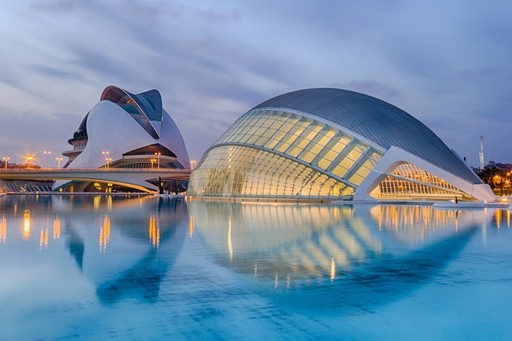
Architecture — Gothic Art style Transfer

About Gothic Art Style
Gothic Art emerged in the 12th century and dominated European visual culture through the 15th century, evolving alongside the great cathedrals that gave the movement its name. Where Romanesque art had been weighty and earthbound, Gothic Art aspired upward -- pointed arches, elongated figures, gold backgrounds that dissolved earthly space into divine light. The style was less a rejection of what came before than a refinement: forms stretched toward the heavens, colors intensified, and every surface became an opportunity for decorative elaboration.
"Yet there is a vast difference between Greek art and Gothic art, between the art of the temple and that of the cathedral. The Greek artists of the fifth century were mainly interested in how to build up the image of a beautiful body. To the Gothic artist all these methods and tricks were only a means to an end, which was to tell his sacred story more movingly and more convincingly." -- The Story of Art, p. 148
 Giotto, "Ascension of Christ" -- Art Institute of Chicago, CC0 / Public Domain
The visual characteristics that define Gothic Art for style transfer purposes are pointed arches (the signature structural and decorative motif), gold backgrounds (dissolving spatial depth into luminous flatness), elongated figures (vertical emphasis in every composition), and religious themes (narrative intensity expressed through gesture and color). The movement's key artist, Giotto di Bondone, bridged the gap between medieval flatness and Renaissance spatial depth -- his figures occupy real space while retaining the decorative intensity of their Gothic context. This mid-frequency, decorative detail profile makes Gothic Art particularly interesting for architecture, where the style's ornamental density meets the building's structural geometry.
Why Gothic Art Works for Architecture Photos
The connection between Gothic Art and architecture is not metaphorical -- it is literal. Gothic Art was created for architecture. The paintings that defined the style were frescoes on cathedral walls, altarpieces set within pointed-arch frames, stained glass windows integrated into structural engineering. When neural style transfer applies Gothic Art's visual language to architecture photographs, it is, in a very real sense, returning the style to its native habitat.
"Gothic practices lived on in English building, as in French, long after Renaissance architects in Italy had struck out in new directions." -- Art Through the Ages, p. 462
On the technical side, Gothic Art's mid-frequency decorative detail complements architecture's high-frequency geometric edges and repetitive patterns. The algorithm's Gram matrices extract the statistical texture patterns of gilded surfaces, pointed-arch geometries, and ornamental tracery from the style reference, then map them onto the photograph's structural elements. Window grids become lancet windows; flat facades acquire the layered depth of altarpiece panels; rooflines gain the ascending rhythm of Gothic pinnacles. The LPIPS of 0.4843 indicates moderate content preservation -- the building remains recognizable, but its surfaces undergo substantial decorative transformation. The FID of 221.01 confirms solid style fidelity, meaning the output genuinely evokes Gothic visual language rather than generic filter effects.
Architecture's rigid geometric structure provides exactly the scaffolding that Gothic Art's decorative impulse needs. Without structure to organize against, the gold backgrounds and elongated forms dissolve into visual noise. With architecture's clear vertical and horizontal divisions, the Gothic transformation achieves the ordered complexity that characterized the greatest medieval cathedrals -- every surface decorated, yet every decoration serving the structural whole.
ArtFID Quality Score: Architecture + Gothic Art
ArtFID (Artistic Frechet Inception Distance) combines two metrics: LPIPS measures content preservation, FID measures style fidelity. ArtFID = (1 + LPIPS) x (1 + FID). Lower = better.
| Content Type | ArtFID | Stars | Verdict |
|---|---|---|---|
| Animals | 269.60 | 5 | Excellent -- organic forms absorb decorative patterning |
| Fantasy | 308.38 | 4 | Strong -- imaginative content embraces medieval themes |
| Street Scenes | 319.62 | 4 | Strong -- urban complexity channels Gothic density |
| Portraits | 322.87 | 4 | Strong -- figures gain elongated Gothic elegance |
| Night Scenes | 327.61 | 4 | Strong -- darkness intensifies gilded luminosity |
| Architecture | 329.52 | 4 | Strong -- geometric structure anchors decorative detail |
| Landscapes | 335.72 | 4 | Good -- horizon provides structural baseline |
| Travel | 344.24 | 4 | Good -- cultural subjects absorb historical styling |
| Still Life | 345.61 | 4 | Good -- defined objects accept ornamental treatment |
| Flowers | 354.10 | 3 | Fair -- organic curves compete with angular Gothic forms |
| Vehicles | 375.30 | 3 | Fair -- mechanical forms resist medieval aesthetics |
| Interiors | 381.27 | 3 | Fair -- confined spaces limit vertical emphasis |
| Urban Scenes | 386.87 | 3 | Fair -- modern visual clutter dilutes Gothic purity |
| Food | 389.11 | 3 | Fair -- secular subjects resist sacred visual language |
| Seascapes | 411.49 | 2 | Challenging -- fluid surfaces lack structural anchors |
Architecture score: 329.52 (LPIPS = 0.4843, FID = 221.01) -- Architecture ranks 6th out of 15 content types with a solid 4-star rating. The LPIPS of 0.4843 means the building's fundamental geometry survives -- silhouette, proportions, and major divisions remain readable -- while surfaces transform into gilded, ornamental planes. The FID of 221.01 confirms the output reads as genuinely Gothic in character, with the decorative intensity and vertical emphasis that defined the medieval visual world.
Before & After: Architecture in Gothic Art Style
Every row below shows three images: the original photograph, a Gothic Art painting used as the style reference, and the AI-generated result.
Architecture -- 4 Stars (ArtFID 329.52)
The building's structural skeleton survives while every surface acquires the layered decorative intensity of a Gothic altarpiece. Flat facades gain the visual density of tracery patterns; windows transform into luminous panels reminiscent of stained glass; the sky behind the building takes on the golden flatness of a medieval manuscript illumination.
| Original Photo | Style Reference | AI Result |
|---|---|---|
|
|
|
| Source photo | Giotto, "Ascension of Christ" (AIC, CC0) | ArtFID: 329.52 -- 4 Stars |
LPIPS: 0.4843 (content preservation) | FID: 221.01 (style fidelity)
Notice how the building's vertical divisions gain emphasis -- the Gothic style naturally amplifies upward-reaching structural elements while compressing horizontal ones. Window openings become the visual focal points, echoing the way actual Gothic architecture made windows the dominant feature of its walls, dissolving solid masonry into luminous voids.
Photography Tips for Best Gothic Art Results
Gothic Art already scores 4 stars on architecture, but the right source photograph amplifies the medieval transformation by providing structural features that resonate with the style's visual vocabulary.
-
Photograph buildings with strong vertical emphasis. Gothic Art is fundamentally a vertical style -- pointed arches, elongated figures, ascending spires. Buildings that reach upward (church towers, skyscrapers, columned facades) provide structural geometry that the algorithm amplifies into Gothic verticality. Low, horizontal buildings produce less dramatic results because they work against the style's inherent upward impulse.
-
Seek buildings with prominent window patterns. Windows were the defining architectural feature of actual Gothic buildings -- walls dissolved into glass. Photographs of buildings with large, regular window grids give the algorithm material to transform into stained-glass-like panels. A solid, windowless facade offers less for the Gothic style to work with.
-
Shoot in warm, golden light. Gothic Art's gold backgrounds and warm palette resonate with golden-hour photography. Late afternoon light casting warm tones across a building facade aligns naturally with the style's chromatic vocabulary. The algorithm amplifies these warm tones into the gilded luminosity that defines the Gothic aesthetic.
-
Include architectural detail and ornamentation. Buildings with visible decorative elements -- cornices, moldings, carved stonework, iron railings -- provide mid-frequency detail that maps naturally onto Gothic ornamental patterns. Modern minimalist architecture with flat, featureless surfaces gives the algorithm less to transform.
-
Frame the building against open sky. Gothic Art frequently used gold or solid-color backgrounds to isolate figures from earthly space. A building photographed against clear sky provides the algorithm with a large area to transform into that characteristic flat, luminous background -- creating the medieval effect of the structure existing outside ordinary spatial depth.
How to Apply Gothic Art Style (3 Steps)
Step 1: Choose Your Photo
Upload any architecture photograph to ArtRobot. Based on our ArtFID testing, animals (269.60), fantasy (308.38), and street scenes (319.62) produce the best Gothic Art results, with architecture scoring a strong 329.52 (4 stars).
Step 2: Select Gothic Art Style
Choose from masterworks by Giotto di Bondone as your style reference. ArtRobot uses the ArtFlow algorithm (CVPR 2021), an invertible neural network that preserves your building's structural geometry while transferring Gothic Art's pointed arches, gold backgrounds, elongated forms, and decorative intensity.
Step 3: Download Your Art
ArtRobot generates your Gothic Art-style architecture image in seconds. Download in multiple resolutions -- from social media sizes to print-ready 4K. The result works as a striking wall piece that transforms modern buildings into medieval visions, or as a social media image that stands out through its historical depth.
Try Gothic Art Style Transfer Free on ArtRobot ->
FAQ
How does Gothic Art style transfer work on architecture photos?
The algorithm extracts Gram matrices from Gothic Art reference paintings -- works by Giotto di Bondone -- and applies those statistical texture patterns to your architecture photograph. It preserves the building's structural geometry (silhouette, window rhythm, vertical divisions) while transforming surface textures into the gilded, ornamental visual language of the medieval period. Gothic Art's mid-frequency decorative detail maps naturally onto architecture's geometric edges and repetitive patterns, producing the 4-star ArtFID score of 329.52.
What ArtFID score does Gothic Art get on architecture?
Gothic Art achieves 329.52 ArtFID on architecture with a 4-star rating, ranking 6th out of 15 content types. Architecture is listed among the style's two best content types alongside portraits. The LPIPS of 0.4843 means the building remains recognizable while surfaces undergo significant decorative transformation. The FID of 221.01 confirms the output reads as genuinely Gothic rather than merely filtered.
Is Gothic Art a good choice for architecture photography?
Gothic Art is a strong choice for architecture, earning 4 stars in our ArtFID testing. The pairing has deep historical resonance -- Gothic Art was literally created for architectural settings. The style's decorative intensity and vertical emphasis complement architecture's geometric structure, producing results that feel historically grounded rather than arbitrary. For buildings with strong vertical elements and prominent windows, the results are particularly compelling. For comprehensive comparison, see Best Art Styles for Architecture.
What architecture photo tips improve Gothic Art results?
Four factors improve results most: (1) strong vertical emphasis in the building itself, resonating with Gothic Art's upward-reaching forms; (2) prominent window patterns that transform into stained-glass-like panels; (3) warm, golden lighting that aligns with the style's gilded palette; and (4) clear sky backgrounds that the algorithm transforms into luminous, flat medieval-style backdrops. Avoid flat, featureless modern facades -- the more architectural detail your photograph contains, the more material the Gothic transformation has to work with.
Can I try Gothic Art architecture style transfer for free?
Yes. Visit ArtRobot to upload an architecture photograph and apply Gothic Art style transfer at no cost. Choose from reference paintings including Giotto di Bondone's masterworks from the Art Institute of Chicago's collection. The algorithm is the same ArtFlow neural network (CVPR 2021) used in our ArtFID benchmark testing.
Related Architecture Styles
Explore more art styles for architecture photography:
- Architecture Style Transfer Guide -- comprehensive comparison of all art styles tested on architecture photography
- Gothic Art Style Transfer -- Gothic Art performance across all 15 content types
- Best Art Styles for Architecture -- top-performing styles ranked by ArtFID score
- Giotto di Bondone Style Transfer -- the father of Western painting whose frescoes bridged medieval and Renaissance worlds
Try It Yourself
Gothic Art and architecture share more than an aesthetic -- they share a history. The painters and the builders worked together, in the same cathedrals, toward the same spiritual vision. At 329.52 and 4 stars, the architecture-Gothic Art pairing transforms your building photographs into something that echoes that original collaboration: structure illuminated by devotion, geometry enriched by ornament. Upload your architecture photo to ArtRobot's Gothic Art style transfer and discover what happens when twelve centuries of visual tradition meet modern neural networks. Free credits included.
Start Your Free Gothic Art Style Transfer on ArtRobot ->
Explore More
Try It Yourself
Transform your own photos into stunning paintings with 80+ artist styles. Free to start.