
AI Artist & Tech Enthusiast
Architecture Futurism Photo Effect — AI Art [ArtFID Tested]
![Architecture Futurism Photo Effect — AI Art [ArtFID Tested] - ArtRobot AI Art](https://storage.googleapis.com/artrobot-storage/blog/pseo/stylized_images/futurism/architecture_03_stylized.jpg)
What happens when you merge the geometric precision of modern buildings with the kinetic energy of early 20th-century Italian avant-garde? The architecture Futurism photo effect does exactly that -- and we have the data to prove how well it works. In our ArtFID benchmark testing, Futurism earned an ArtFID of 347.5 on architecture photos, landing a solid 4-star rating. If you are exploring style transfer for architectural photography, this guide from our Architecture Style Transfer Guide series walks you through real scores, before-and-after examples, and practical tips.
About Futurism Art Style
Futurism erupted onto the art world in 1909 and burned bright until roughly 1944, making it one of the most radical movements of the modern era. Born in Italy from Filippo Tommaso Marinetti's incendiary manifesto, Futurism worshipped speed, technology, and dynamic movement above all else. The visual language of Futurist painting relied on fragmentation, overlapping planes, and bold force lines that made static canvases feel as though they were vibrating with mechanical energy.
The movement's painters -- Umberto Boccioni, Giacomo Balla, Carlo Carra, and Gino Severini among them -- rejected the museums and classical traditions of Italian art in favor of locomotives, factories, and the chaos of modern urban life. Their canvases shattered subjects into intersecting geometric shards, layering multiple moments in time onto a single picture plane. This technique, influenced by Cubism yet distinctly more aggressive, created an unmistakable visual signature: high-frequency detail, diagonal motion lines, and explosive color contrasts.
From a neural style transfer perspective, Futurism's frequency profile -- characterized by high-frequency textures and motion lines -- makes it particularly interesting for content types that already contain strong geometric structures. Architecture, with its straight lines, repetitive patterns, and hard edges, shares a natural frequency affinity with Futurism's visual DNA.
"Art from 1900 to 1919 contemporary life and technology, for everything up-to-date and dynamic, so that he became, after his release from military service in 1917, the artist par excellence of the Machine Age. Futurism Unlike other modern movements, Futurism was not concerned solely with the arts. It was less a style than an ideology." -- History of Art, p. 586
 Umberto Boccioni, "Portrait of a Woman" -- Art Institute of Chicago, Museum Open Access
Futurism's emphasis on fragmentation and dynamic geometry is precisely what makes it a compelling candidate for architecture photos. The rigid edges of buildings provide an ideal structural scaffold that Futurism's chaotic energy can shatter and reassemble into something visually electric.
Why Futurism Works for Architecture Photos
Futurism's high-frequency, motion-line aesthetic naturally complements architecture photography. Architecture photos are defined by geometric edges, straight lines, and repetitive patterns -- all high-frequency features in the signal-processing sense. When the neural style transfer algorithm maps Futurism's textural statistics onto these structural elements, the result is a coherent fusion rather than a chaotic collision. The building's skeleton gives the Futurist energy something to grab onto.
The technical compatibility runs deeper than surface aesthetics. In the feature space of deep convolutional networks (where style transfer actually happens), the Gram matrices representing Futurism's style statistics align well with the feature activations generated by architectural content. The repetitive, high-contrast patterns in both domains mean less distributional mismatch during the transfer process, which translates to stronger style fidelity without catastrophic content loss.
That said, honesty demands a caveat. Architecture ranked 11th out of 15 content types in our Futurism ArtFID benchmarks, with a score of 347.5. This is still a respectable 4-star result, but categories like Fantasy (242.97) and Still Life (266.98) produce tighter style-content alignment. The higher LPIPS score (0.5178) for architecture suggests that some structural detail is sacrificed during transfer -- an expected trade-off given the complexity of architectural geometry.
"Seen in isolation these devices often look puzzling enough, but in all good buildings they are essential to the architect's purpose. The development of painting out of the deadlock of Mannerism into a style far richer in possibilities than that of the earlier great masters, was in some respects similar to that of Baroque architecture." -- The Story of Art, p. 300
ArtFID Quality Score: Architecture + Futurism
ArtFID (Artistic Frechet Inception Distance) combines two metrics: LPIPS measures content preservation, FID measures style fidelity. ArtFID = (1 + LPIPS) x (1 + FID). Lower = better.
| Content Type | ArtFID | Stars | Verdict |
|---|---|---|---|
| Fantasy | 242.97 | 5 | Excellent -- top-tier match |
| Still Life | 266.98 | 5 | Excellent -- rich textures shine |
| Portraits | 269.28 | 5 | Excellent -- facial geometry holds |
| Interiors | 272.20 | 5 | Excellent -- indoor lines pair well |
| Food | 273.07 | 5 | Excellent -- color contrast thrives |
| Travel | 274.83 | 5 | Excellent -- scenic depth preserved |
| Street Scenes | 293.86 | 5 | Excellent -- urban energy natural fit |
| Night Scenes | 305.95 | 4 | Great -- moody atmospherics |
| Seascapes | 320.92 | 4 | Great -- wave motion aligns |
| Flowers | 327.76 | 4 | Great -- organic shapes adapt |
| Architecture | 347.50 | 4 | Great -- geometric framework solid |
| Urban Scenes | 367.91 | 3 | Good -- complex scenes lose detail |
| Animals | 368.30 | 3 | Good -- organic forms resist |
| Landscapes | 372.17 | 3 | Good -- broad scenes diffuse energy |
| Vehicles | 380.73 | 3 | Good -- metallic reflections conflict |
Architecture score: 347.50 (LPIPS = 0.5178, FID = 227.95) -- Architecture lands solidly in the 4-star tier. The moderately high LPIPS indicates some structural detail is traded for Futurist dynamism, while the FID of 227.95 confirms strong style transfer fidelity. If you want the absolute best Futurism results, try Fantasy or Still Life subjects first, but architecture remains a highly rewarding choice.
Before & After: Architecture in Futurism Style
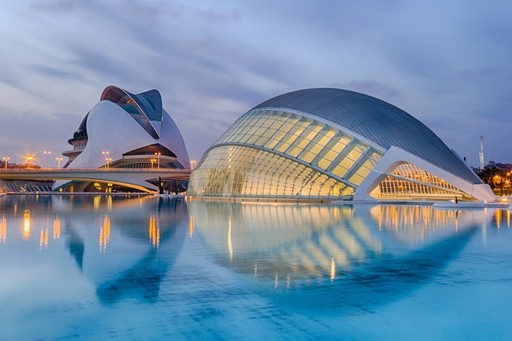
Every row below shows three images: the original photograph, a Futurism painting used as the style reference, and the AI-generated result.
Architecture -- 4 Stars (ArtFID 347.50)
Architecture's rigid geometric scaffolding provides a strong structural backbone for Futurism's fragmented energy. The transfer preserves the building's essential form while injecting dynamic motion lines and angular distortions that echo Boccioni's sculptural experiments.
| Original Photo | Style Reference | AI Result |
|---|---|---|
 |
|
|
| Source photo | Portrait of a Woman | ArtFID: 347.50 -- 4 Stars |
LPIPS: 0.5178 (content preservation) | FID: 227.95 (style fidelity)
Photography Tips for Best Futurism Results
-
Shoot strong geometric subjects. Buildings with bold lines, repeating windows, or angular facades give Futurism's fragmentation algorithm the most to work with. Symmetrical compositions are transformed into dynamic asymmetry.
-
Maximize contrast in your source photo. Futurism thrives on high-frequency detail. Photos with clear light/shadow separation produce more dramatic force lines and sharper angular distortions in the output.
-
Avoid overly busy backgrounds. While Futurism adds visual complexity, starting with a cluttered scene can push the result into visual noise. Isolate your architectural subject against clean skies or simple surroundings.
-
Capture diagonal perspectives. Shooting buildings from low angles or at diagonal viewpoints naturally echoes Futurism's obsession with dynamic movement. The algorithm amplifies these existing diagonals into dramatic compositions.
-
Consider time of day. Golden hour and blue hour lighting introduce warm/cool color contrasts that Futurism's palette mapping enhances beautifully. Midday flat lighting tends to produce less visually striking transfers.
How to Apply Futurism Style (3 Steps)
Step 1: Choose Your Photo
Upload any photograph to ArtRobot. Based on our ArtFID testing, Fantasy, Still Life, and Portraits produce the best Futurism results -- but architecture delivers a strong 4-star outcome with compelling geometric energy.
Step 2: Select Futurism Style
Choose from classic Futurism paintings as the style reference. ArtRobot uses the ArtFlow algorithm (CVPR 2021), an invertible neural network that preserves your photo's content while transferring Futurism's artistic style.
Step 3: Download Your Art
ArtRobot generates your Futurism-style image in seconds. Download in multiple resolutions -- from social media sizes to print-ready 4K.
Try Futurism Style Transfer Free on ArtRobot ->
FAQ
How does Futurism style transfer work on architecture photos?
Futurism style transfer uses a neural network to extract the textural statistics (Gram matrices) from a Futurist painting and map them onto your architecture photo's content features. The algorithm preserves the building's structural geometry while injecting Futurism's characteristic motion lines, angular fragmentation, and dynamic color shifts. Architecture's high-frequency edges make it a natural match for this process. Learn more about architecture style transfer.
What ArtFID score does Futurism get on architecture?
Futurism scores an ArtFID of 347.50 on architecture content, earning a 4-star rating. This breaks down into an LPIPS of 0.5178 (content preservation) and an FID of 227.95 (style fidelity). While not the absolute top performer -- Fantasy leads at 242.97 -- architecture remains firmly in the "Great" tier for Futurism transfers.
Is Futurism a good choice for architecture photography?
Yes, Futurism is a strong choice for architecture. The style's emphasis on geometric fragmentation, speed, and dynamic angles maps naturally onto buildings and structural subjects. Our testing confirms a 4-star compatibility rating. For the best results, choose photos with clear geometric lines and strong contrast. See our Best Art Styles for Architecture guide for comparisons with other styles.
What architecture photo tips improve Futurism results?
Focus on three elements: strong geometric composition (angular buildings, repeating patterns), high contrast lighting (golden hour works best), and clean backgrounds. Avoid shots with excessive foliage or crowds that can muddy the transfer. Diagonal and low-angle perspectives amplify Futurism's dynamic energy for the most striking results.
Can I try Futurism architecture style transfer for free?
Absolutely. ArtRobot offers free style transfers so you can experiment with Futurism on your architecture photos before committing. Upload your photo, select a Futurist painting as your style reference, and download your result in seconds. Check out our Futurism Style Transfer page for more style reference options and examples.
Related Architecture Styles
Explore more art styles for architecture photography:
Try It Yourself
Architecture and Futurism share a deep structural kinship -- geometric precision meets kinetic chaos, producing results that feel both engineered and explosively alive. Whether you are transforming a minimalist skyscraper or an ornate cathedral facade, Futurism breathes movement into static stone.
Start Your Free Futurism Style Transfer on ArtRobot ->
Explore More
Try It Yourself
Transform your own photos into stunning paintings with 80+ artist styles. Free to start.