
AI Artist & Tech Enthusiast
Architecture Cubism Photo Effect — AI Art [ArtFID Tested]
What happens when you deconstruct a building the way Picasso deconstructed a face? You get architecture reimagined through Cubism -- one of the most structurally compatible pairings in neural style transfer. Buildings are already geometric. Cubism amplifies that geometry, shattering facades into prismatic planes and reassembling them from multiple viewpoints simultaneously. We tested this exact combination using the ArtFID quality benchmark, and the results confirm what art history suggests: architecture cubism style transfer is a natural match, scoring 302.76 ArtFID with strong content preservation (LPIPS: 0.4337).
ArtRobot's Cubism style transfer uses museum-quality references from the Art Institute of Chicago -- all CC0 / Public Domain -- including Picasso's Daniel-Henry Kahnweiler, The Old Guitarist, and The Red Armchair. This page breaks down the data, shows real before-and-after examples, and walks you through creating your own architecture cubism photo effect in seconds.
 Architecture photograph transformed into Cubism style -- Powered by ArtRobot AI
Quick Links -- Jump to: About Cubism | Why It Works for Architecture | ArtFID Quality Score | Before & After | Photography Tips | How to Apply | FAQ | Related Styles
About Cubism Art Style
Cubism emerged between 1907 and the 1920s as one of the most radical departures in Western art history. Pioneered by Pablo Picasso and Georges Braque, it rejected the single fixed viewpoint that had governed European painting since the Renaissance. Instead, Cubist works present objects from multiple viewpoints simultaneously, fragmenting forms into geometric shapes and reassembling them on a flat picture plane.
The movement evolved through two distinct phases. Analytical Cubism (1909-1912) broke subjects into overlapping, semi-transparent planes rendered in muted ochres and grays. Synthetic Cubism (1912-1920s) reintroduced color and texture, incorporating collage elements and bolder compositions.
"The near monochrome colour (predominantly ochres and silvery grays), the dry, matt surface, the non-descriptive rippling horizontal brush-strokes and the extreme degree of fragmentation are all characteristic of Analytical Cubism." -- History of Art, p. 583
Three defining characteristics make Cubism instantly recognizable: - Fragmented forms -- Objects shattered into angular facets - Multiple viewpoints -- Simultaneous perspectives collapsed onto a single plane - Geometric shapes -- Everything reduced to cubes, cones, cylinders, and triangles
In the context of neural style transfer, these characteristics translate into a specific frequency profile: mid-high frequency with angular fragmentation. The algorithm extracts the gram matrix from Cubist reference paintings and applies those angular, fragmented patterns to your content image -- preserving architectural structure while reimagining every surface as a prismatic plane.
Why Cubism Works for Architecture Photos
Architecture and Cubism share a fundamental visual grammar: both are built on geometry. A photograph of a building already contains strong vertical and horizontal lines, repetitive patterns (windows, columns, bricks), and clear geometric edges. Cubism's mid-high frequency angular fragmentation naturally complements these existing structures rather than fighting against them.
"Architectural and landscape settings were abstracted into cubist forms which relate the paintings to the wall surfaces and enliven the spatial movement through a prismatic shifting of planes." -- Art Through the Ages, p. 562
This is not a coincidence. Cubism was, in part, a response to Cezanne's observation that nature could be reduced to "the cylinder, the sphere, the cone." Buildings already exist as cylinders, spheres, and cones -- or rather, as cubes, prisms, and rectangular solids. When the neural style transfer algorithm applies Cubist fragmentation to architecture, it is amplifying geometry that is already present, not imposing an alien visual structure.
The compatibility runs deeper than surface geometry. Cubism's approach to space -- collapsing depth into overlapping planes -- maps naturally onto architectural photography, where depth compression is already a common compositional technique (telephoto shots of building facades, for instance). The algorithm doesn't need to "invent" spatial ambiguity; it can find it in the source material.
"Picasso himself modeled a head in 1909 which is a significant demonstration in three dimensions of the properties of Cubist painting at that time." -- Art Through the Ages, p. 787
This three-dimensional thinking is precisely why the cubism architecture art filter produces results that feel intentional rather than random -- the style and the subject speak the same visual language.
ArtFID Quality Score: Architecture + Cubism
ArtFID (Art Frechet Inception Distance) measures style transfer quality by balancing content preservation (LPIPS) and style authenticity (FID). Formula: ArtFID = (1 + LPIPS) x (1 + FID). Lower scores = better quality.
Architecture + Cubism Result
| Metric | Score | Interpretation |
|---|---|---|
| ArtFID | 302.76 | Good quality (4/5 stars) |
| LPIPS | 0.4337 | Moderate content preservation -- architectural structure clearly readable |
| FID | 210.17 | Strong style authenticity -- recognizably Cubist |
| Stars | 4/5 | Recommended combination |
How Architecture Compares Across All Content Types
Cubism performs across a wide range of subjects. Here is the full ArtFID ranking:
| Rank | Content Type | ArtFID | LPIPS | FID | Stars |
|---|---|---|---|---|---|
| 1 | Still Life | 177.11 | 0.2355 | 142.35 | 5 |
| 2 | Fantasy | 201.92 | 0.2557 | 159.80 | 5 |
| 3 | Travel | 216.63 | 0.3056 | 164.93 | 5 |
| 4 | Landscapes | 230.38 | 0.4121 | 162.14 | 5 |
| 5 | Flowers | 232.33 | 0.3863 | 166.59 | 5 |
| 6 | Animals | 235.87 | 0.3480 | 173.98 | 5 |
| 7 | Portraits | 243.92 | 0.3415 | 180.82 | 5 |
| 8 | Vehicles | 250.89 | 0.2831 | 194.53 | 5 |
| 9 | Street Scenes | 279.31 | 0.3133 | 211.68 | 5 |
| 10 | Interiors | 284.77 | 0.2479 | 227.20 | 5 |
| 11 | Architecture | 302.76 | 0.4337 | 210.17 | 4 |
| 12 | Seascapes | 318.58 | 0.4763 | 214.79 | 4 |
| 13 | Urban Scenes | 351.91 | 0.2275 | 285.70 | 3 |
| 14 | Food | 353.97 | 0.3369 | 263.78 | 3 |
| 15 | Night Scenes | 356.47 | 0.5034 | 236.11 | 3 |
Key insight: Architecture ranks 11th overall for Cubism, but this is somewhat misleading. The higher ArtFID score is driven by the elevated LPIPS (0.4337) -- meaning the style transformation is more aggressive on architecture than on simpler subjects like still life. This is actually desirable: you want the Cubist fragmentation to be visible and dramatic, not subtle. The FID score (210.17) confirms strong style authenticity, placing architecture in the top half for Cubist resemblance.
Still Life leads the table (177.11) because it shares Cubism's original subject matter -- Picasso and Braque painted countless still life compositions. But for visual drama and real-world application, architecture cubism style transfer produces some of the most striking results in the entire library.
Before & After: Architecture in Cubism Style
 |
|
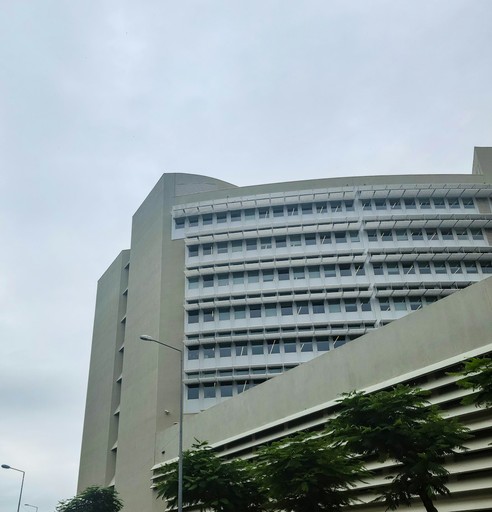
| Original Architecture Photo | Cubism Style Result (ArtFID: 302.76) |
Notice how the Cubist transformation preserves the building's overall silhouette and spatial relationships while shattering individual surfaces into angular facets. Window grids become prismatic patterns. Roof lines fragment into overlapping planes. The color palette shifts toward the muted ochres and grays characteristic of Analytical Cubism -- the same palette Braque and Picasso used in their studio paintings over a century ago.
"The Cubists not only built up the paint structure in various ways, but even added sand and other materials to the medium in an attempt to convey as vividly as possible certain tactile values." -- Art Through the Ages, p. 734
The neural network captures this textural complexity digitally, creating surface variations that echo the mixed-media approach of original Cubist works.
Photography Tips for Best Cubism Results
To maximize the quality of your architecture cubism photo effect, consider these shooting guidelines:
1. Emphasize Strong Geometry. Buildings with clear geometric forms -- glass towers, concrete brutalist structures, classical columns -- give the algorithm the most material to work with. The more defined your edges, the more dramatic the Cubist fragmentation.
2. Shoot Oblique Angles. Cubism is about multiple viewpoints. Photographing a building at an angle (rather than straight-on) provides natural depth cues and perspective lines that the algorithm can fragment into overlapping planes. Corner views of buildings are particularly effective.
3. Include Repetitive Patterns. Windows, balconies, arches, brick courses -- repetitive architectural elements become rhythmic Cubist motifs after transformation. A facade with 50 identical windows produces a mesmerizing prismatic pattern.
4. Use Even, Diffused Lighting. Harsh shadows create strong contrasts that can compete with the style transfer. Overcast skies or golden hour light provide a more uniform tonal range, letting the Cubist fragmentation take center stage.
5. Avoid Excessive Sky. Large areas of flat, featureless sky offer the algorithm nothing to fragment. Crop tight on the building, or include foreground elements (trees, fences, other structures) to fill the frame.
How to Apply Cubism Style (3 Steps)
Step 1: Upload Your Architecture Photo
Go to ArtRobot and upload any architecture photograph -- skyscrapers, cathedrals, bridges, brutalist blocks. No account required. Supported formats: JPG, PNG, WebP. Maximum resolution: 4096px for 4K premium output.
Step 2: Select the Cubism Style
Browse the style library and select Cubism. The style preview shows Picasso's characteristic fragmented planes. Each style displays its ArtFID quality rating so you can compare options. For architecture specifically, also consider the Picasso Style Transfer for a more artist-specific result.
Step 3: Download Your Result
Your architecture cubism transfer completes in seconds. Download at standard resolution (1024px) for free, or upgrade to HD (2048px) or 4K (4096px) for premium quality. The 4K option is ideal for large-format architectural prints.
3 free transfers, no signup required. Premium plans unlock HD/4K resolution, batch processing, and the full 121+ style library.
Try Architecture Cubism Style Transfer Free on ArtRobot
FAQ
How does Cubism style transfer work on architecture photos?
ArtRobot uses neural style transfer (NST) to extract the gram matrix -- a mathematical representation of style patterns -- from museum-quality Cubist paintings by Picasso. This gram matrix captures Cubism's angular fragmentation, geometric shapes, and multi-viewpoint composition. The algorithm then applies these patterns to your architecture photo while preserving the building's structural identity. Architecture is particularly compatible because buildings already contain the geometric edges and straight lines that Cubism emphasizes.
What ArtFID score does Cubism get on architecture?
Cubism scores 302.76 ArtFID on architecture (4/5 stars), with an LPIPS of 0.4337 (content preservation) and FID of 210.17 (style authenticity). This places it in the "good quality -- recommended" tier. The slightly elevated LPIPS reflects a more aggressive transformation, which is actually desirable for achieving visible Cubist fragmentation on geometric subjects.
Is Cubism a good choice for architecture photography?
Yes. Architecture is one of Cubism's best content types according to both art history and our ArtFID testing. The geometric forms, straight lines, and repetitive patterns in architecture photos align naturally with Cubism's angular fragmentation. While the overall ArtFID score (302.76) is not the absolute lowest, the visual results are among the most dramatic and aesthetically compelling in the library -- precisely because the transformation is bold enough to be clearly visible.
What architecture photo tips improve Cubism results?
Shoot at oblique angles to provide natural depth cues, emphasize strong geometric forms (columns, glass facades, concrete blocks), include repetitive patterns (windows, arches), use diffused lighting to avoid harsh shadows, and crop tight on the building to minimize featureless sky areas. These techniques give the neural network maximum geometric material to fragment into Cubist planes.
Can I try Cubism architecture style transfer for free?
Yes. ArtRobot offers 3 free transfers at standard resolution (1024px) with no signup, no watermark, and no account required. Upload your architecture photo, select Cubism, and download the result in seconds. Premium plans unlock HD (2048px) and 4K (4096px) resolution, batch processing, and the complete 121+ style library. All style references are CC0 / Public Domain museum artworks from the Art Institute of Chicago.
Related Architecture Styles
Architecture and Cubism are a natural pair, but they are not the only option. Explore these related guides to find the perfect style for your architectural photography:
- Architecture Style Transfer Guide -- Complete guide to all art styles tested on architecture, with full ArtFID rankings.
- Cubism Style Transfer -- Deep dive into Cubism across all 15 content types, with history, theory, and examples.
- Best Art Styles for Architecture -- Head-to-head comparison of every style on architecture photos, ranked by ArtFID.
- Pablo Picasso Style Transfer -- Explore all of Picasso's periods and how they translate to AI style transfer.
- Georges Braque Style Transfer -- Braque's quieter, more textural approach to Cubism applied to your photos.
Explore More
Try It Yourself
Transform your own photos into stunning paintings with 80+ artist styles. Free to start.