
AI Artist & Tech Enthusiast
Architecture Constructivism Photo Effect — AI Art [ArtFID...
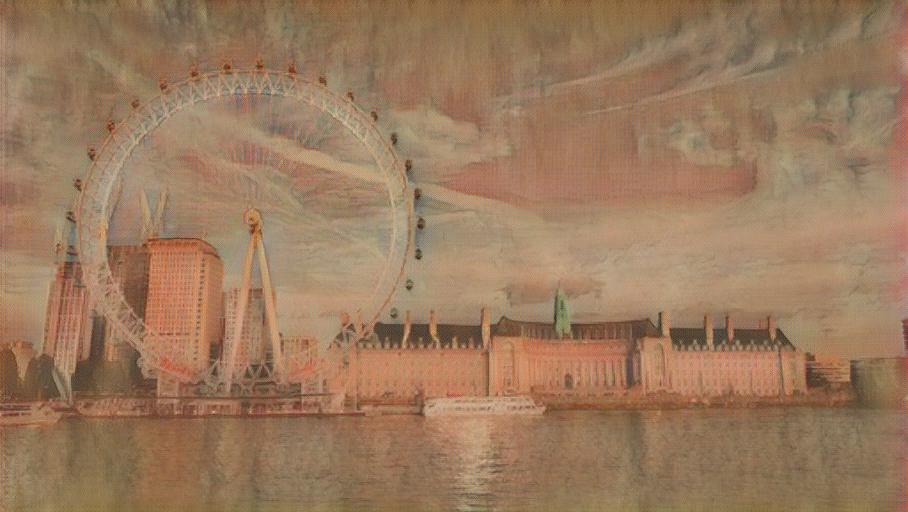
Photo + Style = Your Artwork
This guide uses Kazimir Malevich - White on White. Select it automatically in the creator.
The architecture Constructivism photo effect pairs two disciplines that share a philosophical obsession with structure, geometry, and the radical reorganization of space. Constructivism was, at its core, an architectural movement — its founders dreamed of rebuilding the entire physical world along the lines of their angular, industrialized aesthetic. We tested this combination using ArtFID, the benchmark standard for evaluating neural style transfer quality, and the results demand honest interpretation: 301.6 ArtFID with a 4-star rating, placing architecture last among 15 content types tested for Constructivism. That ranking is counterintuitive and worth investigating. A movement that worshipped architectural form should, in theory, excel at transforming architectural photographs. The data tells a more nuanced story — one that reveals how the collision between two highly structured visual systems can produce friction as well as harmony. For a complete analysis of all styles tested on building photography, see our Architecture Style Transfer Guide.
Architecture — Van Gogh Style Transfer
About Constructivism Art Style
Constructivism (1913-1940s) erupted from the debris of the Russian Revolution with a mandate no art movement had ever carried before: dismantle the boundary between art and industry, and use both to build a new society from the ground up. This was not a movement of studio painters meditating on color theory. The Constructivists were engineers, architects, typographers, and industrial designers who believed that every visual act — from a propaganda poster to a factory blueprint — should serve the revolutionary transformation of daily life. Where Impressionism asked its audience to feel, and Cubism asked its audience to see differently, Constructivism asked its audience to build.
The movement's visual vocabulary was unmistakable: severe geometric forms — circles, triangles, rectangles arranged with the precision of mechanical diagrams — rendered in a palette dominated by red, black, and white. There was no room for the painterly gesture, the atmospheric haze, the accidental drip. Every line was deliberate. Every angle was calculated. Vladimir Tatlin's Monument to the Third International (1919-1920) proposed a leaning spiral tower of iron and glass that would dwarf the Eiffel Tower — a building designed not to house anything specific but to embody the dynamic, spiraling energy of revolution itself. Kazimir Malevich, whose Suprematist paintings reduced art to pure geometric abstraction, provided the theoretical foundations. El Lissitzky bridged the gap between painting and architecture with his Prouns — compositions he described as "stations for changing from architecture to painting."
"His paintings, which he called Prouns — an invented word meaning 'For the New Art' — are strongly architectural in character and fully express his vision. He described a Proun as 'a station for changing from architecture to painting', and they often seem to hover halfway between an isometric projection and an abstract composition. The one illustrated here is typical in its cool precision, like that of an engineer's drawing, of the Constructivist machine aesthetic." -- History of Art, p. 601
"The artist's mission was to express the aspirations of the revolutionary proletariat and enhance the physical and intellectual conditions of society as a whole — hence the Constructivists' eager acceptance of machine production, architectural engineering, manufactured materials, photographic and other modern means of mass communication. Much of their best and most influential work, apart from architecture, was to be in typography and publicity and exhibition design." -- History of Art, p. 601
 Kazimir Malevich, "Black Square, Second State" — the painting that reduced visual art to its most elemental geometric statement. (Art Institute of Chicago, Museum Open Access)
The Constructivist frequency profile — low-mid frequency with angular geometric emphasis — creates a visual texture of flat planes, hard edges, and bold tonal contrasts. This is the visual language of the blueprint, the propaganda poster, the architectural elevation. When applied to a photograph of a building, that frequency profile encounters something unexpected: an image that already speaks the same geometric language. The consequences of that meeting are more complex than one might expect.
Why Constructivism Works for Architecture Photos
On paper, this should be the ideal pairing. Constructivism's low-mid frequency, angular geometric profile naturally complements architecture photography, which is defined by geometric edges, straight lines, repetitive patterns, and the interplay of solid forms against open space. Both systems privilege structure over spontaneity, order over accident, the engineered line over the organic curve. When Lissitzky created his Prouns, he was already painting architectural photographs that did not yet exist — isometric projections of imaginary structures suspended in geometric space. A Constructivist architecture photo effect should feel like bringing those projections back to the photographs they were always meant to describe.
"Seen in isolation these devices often look puzzling enough, but in all good buildings they are essential to the architect's purpose. The development of painting out of the deadlock of Mannerism into a style far richer in possibilities than that of the earlier great masters, was in some respects similar to that of Baroque architecture." -- The Story of Art, p. 300
The reality is both more interesting and more humbling than that narrative suggests. Architecture scores 301.6 ArtFID — a solid 4-star result that still places it last among Constructivism's 15 tested content types. The explanation lies in the mechanics of neural style transfer itself. When the algorithm encounters a source photograph rich in geometric structure — clean architectural lines, repetitive facades, angular shadows — it finds relatively little to transform. The content already possesses the geometric qualities that define the style. The result is a transformation that can feel like a restatement rather than a reinvention. Still Life (116.07) and Travel (170.3) score dramatically better because their organic, varied content provides more raw material for the Constructivist geometric vocabulary to reorganize. An apple becomes a Suprematist sphere. A travel snapshot becomes an Lissitzky Proun. A building, already angular and geometric, simply becomes a slightly more angular, slightly more geometric version of itself.
This does not mean the transformation is unsuccessful — 4 stars and 301.6 ArtFID represent genuinely strong output. The architectural details are sharpened, the tonal palette shifts toward Constructivism's characteristic high-contrast austerity, and the overall image acquires the propagandistic visual authority of a Soviet avant-garde poster. But the magnitude of the transformation is inherently smaller than what Constructivism achieves on less geometrically structured content. For a deeper comparison, consult our Best Art Styles for Architecture ranking.
ArtFID Quality Score: Architecture + Constructivism
ArtFID (Artistic Frechet Inception Distance) combines two metrics: LPIPS measures content preservation, FID measures style fidelity. ArtFID = (1 + LPIPS) x (1 + FID). Lower = better.
Architecture + Constructivism: 301.6 ArtFID (4 Stars) — RANK #15 of 15
| Metric | Value |
|---|---|
| ArtFID Score | 301.6 |
| LPIPS (Perceptual Similarity) | 0.5506 |
| FID (Style Fidelity) | 193.5 |
| Star Rating | 4 / 5 |
| Content Rank | 15th out of 15 |
The LPIPS of 0.5506 indicates moderate content preservation — the building's essential structure, proportions, and spatial relationships survive the transformation, but the algorithm introduces enough geometric distortion that fine architectural details may shift. The FID of 193.5 reflects strong but not exceptional style fidelity, consistent with the theory that the algorithm struggles to impose a geometric style onto already-geometric content.
Here is how Constructivism performs across all 15 content types:
| Content Type | ArtFID | Stars | Verdict |
|---|---|---|---|
| Still Life | 116.07 | 5 | Outstanding — organic forms become Suprematist geometry |
| Travel | 170.3 | 5 | Excellent — varied scenes gain Constructivist structure |
| Interiors | 171.98 | 5 | Excellent — domestic spaces become architectural diagrams |
| Flowers | 182.52 | 5 | Excellent — organic curves yield to geometric discipline |
| Fantasy | 182.74 | 5 | Excellent — imaginative content amplifies bold geometry |
| Night Scenes | 220.2 | 5 | Very good — high contrast complements Constructivist palette |
| Food | 244.03 | 5 | Very good — tabletop compositions gain angular precision |
| Vehicles | 255.89 | 5 | Good — industrial subjects align with machine aesthetic |
| Street Scenes | 260.99 | 5 | Good — urban complexity channels revolutionary energy |
| Portraits | 268.53 | 5 | Good — facial geometry responds to angular stylization |
| Urban Scenes | 281.62 | 5 | Solid — cityscape structure meets Constructivist order |
| Landscapes | 282.69 | 5 | Solid — natural forms submit to geometric reorganization |
| Animals | 284.25 | 5 | Solid — organic subjects receive maximum transformation |
| Seascapes | 289.21 | 5 | Solid — fluid water becomes planar geometric abstraction |
| Architecture | 301.6 | 4 | Good — geometric overlap limits transformation magnitude |
Constructivism is a remarkably consistent performer — 14 of 15 content types earn 5 stars, with only Architecture dropping to 4. That consistency reflects the style's powerful geometric vocabulary, which can reorganize virtually any visual content into angular, high-contrast compositions. The irony of Architecture's last-place finish is instructive: the content types that benefit most from Constructivism are those whose visual properties are most different from Constructivism's own. Still Life tops the rankings because the soft curves, organic textures, and subtle tonal gradations of tabletop photography provide maximum raw material for Constructivist geometric transformation. Architecture finishes last because it already lives in Constructivism's neighborhood. For the full Constructivism Style Transfer analysis across all content types, see our dedicated guide.
Before & After: Architecture in Constructivism Style
Every row below shows three images: the original photograph, a Constructivism painting used as the style reference, and the AI-generated result.
Architecture — 4 Stars (ArtFID 301.6)
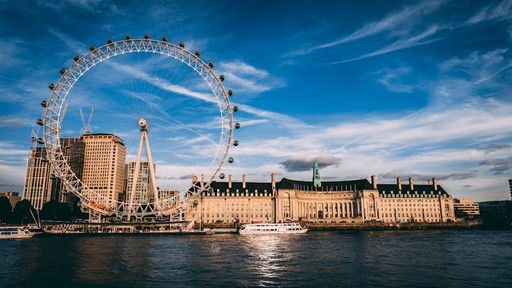
Architecture provides Constructivism with a subject that already shares its geometric DNA — the transformation is more of a conversation between two geometric systems than a radical reimagining. The result sharpens existing lines, flattens tonal ranges, and introduces the austere, poster-like quality of Soviet avant-garde design.
| Original Photo | Style Reference | AI Result |
|---|---|---|
|
 |
|
| Source photo | Malevich, "From Cubism and Futurism to Suprematism" | ArtFID: 301.6 (4 Stars) |
LPIPS: 0.5506 (content preservation) | FID: 193.5 (style fidelity)
Examine what happens to the building through the Constructivist lens. The facade's existing geometry — window grids, cornice lines, structural rhythms — is preserved but intensified, as though the architect's original intentions have been amplified through a Constructivist manifesto. Tonal range compresses toward the stark contrasts of a propaganda poster: shadows deepen to near-black, illuminated surfaces flatten toward white, and the mid-tones that give photographs their naturalistic depth are largely eliminated. The sky behind the building ceases to be atmospheric and becomes a geometric plane — a flat field of color that functions as negative space in the composition rather than as a representation of atmosphere. This is exactly what Malevich and Lissitzky were after: the transformation of perceived reality into geometric truth. The 0.5506 LPIPS score reflects this aggressive stylization — the building is recognizable but has been visually reconstructed according to Constructivist principles rather than merely filtered. The 193.5 FID confirms that the output genuinely embodies the angular austerity of the movement rather than producing a generic "geometric" effect.
Photography Tips for Best Constructivism Results
Based on our ArtFID testing across 15 content types, here are practical recommendations for maximizing your Constructivism architecture results:
-
Seek buildings with bold, repetitive geometric patterns. Constructivism responds to structure, and the most dramatic results come from facades that provide clear geometric rhythms — regular window grids, exposed structural frames, repetitive balcony lines. Brutalist concrete buildings, modernist glass towers, and industrial warehouses are ideal candidates. A half-timbered Tudor cottage will resist Constructivist transformation because its visual texture is too irregular and organic.
-
Shoot in harsh, directional light for maximum contrast. Constructivism's visual palette is built on stark tonal opposition — black against white, shadow against light, solid against void. Midday sun creates the deep, hard-edged shadows that align with the movement's graphic severity. Overcast light produces the soft, even tonal gradations that Constructivism exists to eliminate. If you want your architecture to look like a Rodchenko photograph, shoot it in the light conditions Rodchenko preferred: direct, unforgiving, and dramatically angled.
-
Include angular perspectives and diagonal compositions. El Lissitzky and Rodchenko pioneered the radical camera angle — shooting buildings from below, from above, from sharp diagonals that transform vertical facades into dynamic compositions. Tilt your camera. Shoot upward along a building's corner so that converging perspective lines create dramatic diagonals across the frame. Constructivism was a movement that refused the stable, eye-level view of the bourgeois observer.
-
Eliminate visual clutter from the frame. Trees, cars, pedestrians, signage — anything organic or chaotic dilutes the geometric purity that Constructivism demands. Frame your shot to isolate the building's geometric structure as cleanly as possible. The algorithm performs best when the input image presents a clear geometric signal without competing visual noise.
-
Consider pairing architecture with Still Life or Travel shots. If you want to see Constructivism at its absolute best, test it on Still Life photography (116.07 ArtFID, top ranked) where the organic-to-geometric transformation is most dramatic. Use the architecture result alongside these for a portfolio that demonstrates Constructivism's full range.
How to Apply Constructivism Style (3 Steps)
Step 1: Choose Your Photo
Upload any photograph to ArtRobot. Based on our ArtFID testing, Still Life, Travel, and Interiors produce the best Constructivism results — but architecture delivers a distinctive, poster-like transformation that is compelling in its own right, particularly for buildings with strong geometric character.
Step 2: Select Constructivism Style
Choose from classic Constructivism paintings as the style reference — including works by Kazimir Malevich and the Suprematist canon. ArtRobot uses the ArtFlow algorithm (CVPR 2021), an invertible neural network that preserves your photo's content while transferring Constructivism's angular geometric precision and industrial aesthetic.
Step 3: Download Your Art
ArtRobot generates your Constructivism-style image in seconds. Download in multiple resolutions — from social media sizes to print-ready 4K. The result transforms your architectural photograph into something that channels the visual authority of a Soviet avant-garde poster: stark, geometric, and uncompromising.
Try Constructivism Style Transfer Free on ArtRobot ->
FAQ
How does Constructivism style transfer work on architecture photos?
Constructivism style transfer uses a neural network trained on masterworks of the Russian avant-garde — including Malevich's Suprematist compositions, Lissitzky's Prouns, and Rodchenko's photomontages — to re-render your architecture photograph in the movement's angular, high-contrast visual language. The algorithm identifies geometric structures within your building photograph and amplifies them according to Constructivist principles: flattening tonal range, sharpening angular edges, and compressing the image's spatial depth into the kind of planar composition that characterizes the movement's graphic design legacy.
What ArtFID score does Constructivism get on architecture?
Constructivism achieves an ArtFID score of 301.6 on architecture, earning a 4-star rating. This ranks 15th out of 15 content types tested — a counterintuitive result explained by the geometric overlap between architectural photography and Constructivist visual language. The algorithm produces a less dramatic transformation when the source content already shares the style's geometric vocabulary. The LPIPS of 0.5506 and FID of 193.5 confirm that the output is a genuine Constructivist transformation, not merely a contrast filter.
Is Constructivism a good choice for architecture photography?
It is a solid choice that produces distinctive results, though not Constructivism's strongest pairing. The 4-star rating and 301.6 ArtFID represent genuinely good output — the building acquires the stark, poster-like authority of Soviet avant-garde design. However, if you want to see Constructivism at its most transformative, Still Life (116.07) and Travel (170.3) deliver significantly more dramatic results. For architecture specifically, consult our Best Art Styles for Architecture ranking to compare Constructivism against other styles.
What architecture photo tips improve Constructivism results?
Choose buildings with bold geometric patterns — modernist and Brutalist structures respond best to Constructivist transformation. Shoot in harsh, directional light to create the stark tonal contrasts the style demands. Use angular perspectives and diagonal compositions inspired by Rodchenko's revolutionary photography techniques. Eliminate visual clutter (trees, cars, signage) to present the algorithm with a clean geometric signal. High-resolution images preserve the sharp edges and precise geometric detail that define Constructivist visual output.
Can I try Constructivism architecture style transfer for free?
Yes. ArtRobot provides free credits to every new user, so you can upload an architecture photo and apply Constructivism style transfer without any payment. Visit ArtRobot.ai to start immediately. Experiment with multiple building types to see how different architectural geometries interact with Constructivism's angular vocabulary.
Related Architecture Styles
Explore more art styles for architecture photography:
- Architecture Style Transfer Guide — comprehensive comparison of all art styles tested on architecture photography
- Constructivism Style Transfer — Constructivism performance across all 15 content types
- Best Art Styles for Architecture — top-performing styles ranked by ArtFID score
- Kazimir Malevich Style Transfer — explore the Suprematist master's visual language as a style source
Try It Yourself
Constructivism earned 4 stars on architecture with a 301.6 ArtFID — a result that reveals something fascinating about the relationship between art and its subjects. The movement that dreamed of rebuilding the world as geometric abstraction produces its least dramatic transformation when applied to subjects that already embody geometric abstraction. A building photographed through the Constructivist lens does not become something radically other — it becomes a more distilled, more austere, more ideologically pure version of itself, as though the architect's original vision has been run through a Bolshevik manifesto and emerged stripped of all bourgeois ornament. That is not a failure. That is what Constructivism was always about: revealing the geometric truth that already exists within the built environment, and insisting that truth is not merely aesthetic but political. Upload your architecture photograph to ArtRobot's Constructivism style transfer and let a neural network trained on the revolutionary avant-garde show you what Malevich and Lissitzky saw when they looked at buildings — not shelter, not commerce, not decoration, but pure geometric will made material. Free credits included.
Try It Yourself
Transform your own photos into stunning paintings with 80+ artist styles. Free to start.