
AI Artist & Tech Enthusiast
Architecture Art Nouveau Photo Effect — AI Art [ArtFID Te...

Art Nouveau was architecture's most dramatic attempt to escape the tyranny of the straight line. Between 1890 and 1910, architects like Gaudi, Horta, and Guimard dissolved rigid geometry into flowing organic curves, making buildings that seemed to grow rather than be constructed. The architecture art nouveau photo effect brings that same organic transformation to your building photographs -- rigid edges soften into flowing lines, geometric surfaces acquire decorative patterning, and ordinary structures gain the sinuous elegance of Klimt's ornamental vision. Our ArtFID testing gives this combination 411.26 (2 stars), a challenging pairing that ranks 4th out of 15 content types. This is an honest assessment: Art Nouveau's high-frequency organic lines create tension with architecture's rigid geometry, producing results that are visually distinctive but technically demanding. For the full architecture style comparison, see the Architecture Style Transfer Guide.
Architecture — Van Gogh Style Transfer

About Art Nouveau Art Style
Art Nouveau swept through Europe between 1890 and 1910, emerging from the Arts and Crafts Movement's rejection of industrial mass production. Where the 19th century had built in straight lines and right angles, Art Nouveau insisted that art should follow nature -- and nature does not build in straight lines. The movement pursued organic curves, flowing asymmetry, and decorative patterns drawn from plants, insects, and the sinuous geometry of natural growth.
"They longed for a 'New Art' based on a new feeling for design and for the possibilities inherent in each material. This banner of a new art or Art nouveau was raised in the eighteen-nineties. Architects experimented with new types of ornament and new types of material." -- The Story of Art, p. 414
 Gustav Klimt, "Portrait of a Lady in a High Hat" -- Art Institute of Chicago, Museum Open Access
Two artists define Art Nouveau's visual language for style transfer. Gustav Klimt pushed the style toward its most ornamental extreme -- his figures dissolve into fields of gold leaf, geometric patterning, and organic decoration where the boundary between figure and background vanishes entirely. Henri de Toulouse-Lautrec brought Art Nouveau's flowing line to poster art, achieving expressive power through simplified, curving contours and flat areas of vivid color. Together, they established the visual characteristics that define the style: organic curves (nature-derived flowing forms), decorative patterns (surface ornamentation that fills every available space), and natural forms (motifs drawn from plants, flowers, and organic growth). The high-frequency, flowing organic lines profile creates a specific interaction with architecture: both the style and the content operate at high frequency, but in fundamentally different ways -- organic versus geometric -- which produces the creative tension reflected in the ArtFID score.
Why Art Nouveau Challenges Architecture Photos
The honest assessment is that Art Nouveau and architecture photography create tension rather than harmony in neural style transfer. This is not a weakness to hide but a creative opportunity to understand.
"But an essentially 'new' style was certainly achieved by the more extreme Art Nouveau designers, notably the Spanish architect Antoni Gaudi, some of whose buildings in Barcelona combine entirely free, asymmetrical, jagged plans with fiercely extravagant and arbitrary forms so that there are no straight walls, no right-angles and everything undulates in an unprecedentedly organic interplay of exterior and interior." -- History of Art, p. 545
The technical explanation lies in frequency conflict. Architecture photographs contain high-frequency geometric edges: straight lines, right angles, repetitive window grids, precise corners. Art Nouveau's style references also contain high-frequency detail, but of a fundamentally different kind: flowing organic curves, decorative arabesques, sinuous plant-derived forms. When the algorithm's Gram matrices force these two high-frequency vocabularies together, they compete rather than complement. The neural network must resolve straight-line geometry against organic-curve patterning, which produces results that are more aggressively transformed than styles where the frequency profiles align naturally.
The LPIPS of 0.5323 reflects this aggressive transformation -- content is significantly reimagined, with architectural edges softened and surfaces densely decorated. The FID of 267.4 confirms that the style transfer is happening (the output does look like Art Nouveau), but the alignment is not as precise as lower-FID styles achieve.
That said, architecture ranks 4th out of 15 content types for Art Nouveau -- meaning it performs better than most subjects. The building's structural skeleton provides organizational geometry that prevents the organic decoration from dissolving into visual chaos. And for certain building types -- Art Nouveau-era structures, buildings with existing ornamental detail, facades with curved elements -- the results can be striking precisely because the style is returning to its native architectural context.
ArtFID Quality Score: Architecture + Art Nouveau
ArtFID (Artistic Frechet Inception Distance) combines two metrics: LPIPS measures content preservation, FID measures style fidelity. ArtFID = (1 + LPIPS) x (1 + FID). Lower = better.
| Content Type | ArtFID | Stars | Verdict |
|---|---|---|---|
| Animals | 336.41 | 4 | Strong -- organic forms align with organic style |
| Street Scenes | 395.61 | 3 | Fair -- urban complexity absorbs decorative density |
| Fantasy | 402.52 | 2 | Challenging -- imaginative content competes with ornamentation |
| Architecture | 411.26 | 2 | Challenging -- geometric rigidity resists organic curves |
| Portraits | 418.43 | 2 | Challenging -- facial structure conflicts with decoration |
| Still Life | 422.21 | 2 | Challenging -- defined objects resist organic dissolution |
| Flowers | 455.87 | 2 | Challenging -- competing organic vocabularies clash |
| Landscapes | 458.87 | 2 | Challenging -- broad areas resist high-frequency patterning |
| Interiors | 471.56 | 2 | Challenging -- confined spaces amplify frequency conflict |
| Vehicles | 472.65 | 2 | Challenging -- mechanical precision opposes organic flow |
| Travel | 474.49 | 2 | Challenging -- cultural specificity resists decorative overlay |
| Food | 480.91 | 2 | Challenging -- secular subjects resist aesthetic treatment |
| Urban Scenes | 485.62 | 2 | Challenging -- dense detail overwhelms ornamental clarity |
| Night Scenes | 489.34 | 2 | Challenging -- darkness obscures decorative patterning |
| Seascapes | 521.21 | 1 | Difficult -- fluid surfaces lack structural anchors |
Architecture score: 411.26 (LPIPS = 0.5323, FID = 267.4) -- Architecture ranks 4th out of 15 content types for Art Nouveau. While the 2-star rating reflects a challenging pairing, context matters: Art Nouveau is one of the most demanding styles in our library, with only one content type (animals) scoring 4 stars. Architecture's 4th-place ranking means it performs better than 11 other content types. The building's geometric structure provides organizational scaffolding that prevents the organic decoration from becoming formless -- which is exactly how actual Art Nouveau architecture worked.
Before & After: Architecture in Art Nouveau Style
Every row below shows three images: the original photograph, an Art Nouveau painting used as the style reference, and the AI-generated result.
Architecture -- 2 Stars (ArtFID 411.26)
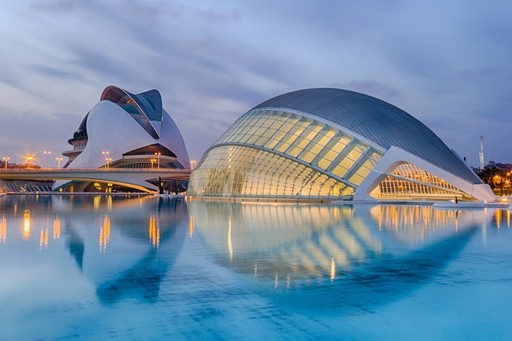
The building's silhouette and major divisions survive while surfaces undergo aggressive decorative transformation. Straight edges acquire a subtle organic waviness; flat surfaces fill with the dense patterning that Klimt used to dissolve the boundary between figure and ground. The result is visually arresting but demands acceptance of significant departure from the original photograph -- this is transformation as artistic statement rather than subtle enhancement.
| Original Photo | Style Reference | AI Result |
|---|---|---|
|
|
|
| Source photo | Klimt, "Portrait of a Lady in a High Hat" (AIC, Museum Open Access) | ArtFID: 411.26 -- 2 Stars |
LPIPS: 0.5323 (content preservation) | FID: 267.4 (style fidelity)
Notice the tension between the building's geometric framework and the organic patterning imposed by the style. Where styles like Neoclassicism or Romanticism work with architecture's geometric nature, Art Nouveau works against it -- and that productive conflict is what makes the results visually distinctive. The building becomes something that could not exist in reality: a rigid structure whose surfaces behave like living, growing organic material.
Photography Tips for Best Art Nouveau Results
Art Nouveau is a demanding style, but the right source photograph minimizes the frequency conflict between geometric architecture and organic decoration.
-
Photograph buildings with existing ornamental detail. The algorithm maps Art Nouveau's organic patterns onto surface detail in the photograph. Buildings with decorative ironwork, carved stonework, patterned tile, or ornamental facades provide existing texture that the organic transformation can build upon. Flat, featureless modernist facades force the algorithm to impose patterning onto blank surfaces, producing less convincing results.
-
Seek buildings with curved elements. Any architectural curve -- arches, domes, round windows, curved balconies -- provides geometry that aligns with Art Nouveau's organic line vocabulary. A building that already contains curved elements gives the algorithm natural anchoring points for the flowing organic transformation. Purely rectilinear buildings maximize the frequency conflict.
-
Shoot Art Nouveau-era architecture. Buildings from the 1890-1910 period often already incorporate Art Nouveau design elements -- Gaudi in Barcelona, Horta in Brussels, Guimard in Paris. Applying Art Nouveau style transfer to buildings that were designed within the movement produces the most historically coherent results, as the style is literally returning to its native context.
-
Favor close-up shots of architectural details over full-building views. Art Nouveau's decorative density works best at the scale of individual architectural elements -- a doorway, a window surround, an ironwork railing. Full-building photographs spread the organic transformation across too large an area, diluting its impact. Close-up detail shots concentrate the decorative intensity where it has the most visual power.
-
Choose source photos with warm, rich color palettes. Klimt's gold-and-earth palette and Toulouse-Lautrec's warm poster colors define Art Nouveau's chromatic range. Photographs of buildings in warm materials (sandstone, brick, copper, terracotta) provide colors that the algorithm can amplify into Art Nouveau's characteristic warmth. Cold, grey concrete buildings produce less chromatically satisfying results.
How to Apply Art Nouveau Style (3 Steps)
Step 1: Choose Your Photo
Upload any architecture photograph to ArtRobot. Based on our ArtFID testing, animals (336.41) produce the best Art Nouveau results. Architecture scores 411.26 (2 stars) but ranks 4th out of 15 content types. For best results, favor buildings with existing ornamental detail and curved elements.
Step 2: Select Art Nouveau Style
Choose from masterworks by Gustav Klimt or Henri de Toulouse-Lautrec as your style reference. ArtRobot uses the ArtFlow algorithm (CVPR 2021), an invertible neural network that preserves your building's structural skeleton while overlaying Art Nouveau's organic curves, decorative patterns, and natural-form ornamentation.
Step 3: Download Your Art
ArtRobot generates your Art Nouveau-style architecture image in seconds. Download in multiple resolutions -- from social media sizes to print-ready 4K. The result is visually distinctive -- a building reimagined through the lens of the movement that tried to make architecture grow like a plant.
Try Art Nouveau Style Transfer Free on ArtRobot ->
FAQ
How does Art Nouveau style transfer work on architecture photos?
The algorithm extracts Gram matrices from Art Nouveau reference paintings -- works by Gustav Klimt and Toulouse-Lautrec -- and applies those statistical texture patterns to your architecture photograph. It preserves the building's structural skeleton (silhouette, major proportions) while transforming surfaces with Art Nouveau's organic curves and decorative patterning. The interaction is more aggressive than many styles because both architecture and Art Nouveau operate at high frequency but in different modes -- geometric versus organic -- producing the distinctive creative tension reflected in the 411.26 ArtFID score.
What ArtFID score does Art Nouveau get on architecture?
Art Nouveau achieves 411.26 ArtFID on architecture with a 2-star rating, ranking 4th out of 15 content types. The LPIPS of 0.5323 reflects significant content transformation, and the FID of 267.4 indicates moderate style fidelity. While Art Nouveau is one of the most demanding styles in our library (only animals achieves 4 stars), architecture performs better than 11 other content types, benefiting from structural geometry that organizes the organic decoration.
Is Art Nouveau a good choice for architecture photography?
Art Nouveau is a bold, distinctive choice rather than a safe one. The 2-star rating reflects genuine frequency conflict between geometric architecture and organic decoration. However, for the right building -- Art Nouveau-era structures, buildings with existing ornamental detail, facades with curved elements -- the results can be striking. If you want a style that enhances architecture's geometric clarity, consider Neoclassicism or Romanticism. If you want a style that challenges it, Art Nouveau delivers a visually unique transformation. For comprehensive comparison, see Best Art Styles for Architecture.
What architecture photo tips improve Art Nouveau results?
Four factors improve results most: (1) existing ornamental detail (ironwork, carved stone, patterned tile) that provides texture for the organic transformation to build upon; (2) curved architectural elements (arches, domes, round windows) that align with Art Nouveau's organic vocabulary; (3) close-up detail shots rather than full-building views, concentrating decorative intensity; and (4) warm-toned building materials (sandstone, brick, terracotta) that resonate with Klimt's gold-and-earth palette. Avoid flat, featureless modernist facades with no surface detail.
Can I try Art Nouveau architecture style transfer for free?
Yes. Visit ArtRobot to upload an architecture photograph and apply Art Nouveau style transfer at no cost. Choose from reference paintings by Gustav Klimt and Henri de Toulouse-Lautrec from the Art Institute of Chicago's collection. The algorithm is the same ArtFlow neural network (CVPR 2021) used in our ArtFID benchmark testing. Compare your result against our before/after example to calibrate expectations.
Related Architecture Styles
Explore more art styles for architecture photography:
- Architecture Style Transfer Guide -- comprehensive comparison of all art styles tested on architecture photography
- Art Nouveau Style Transfer -- Art Nouveau performance across all 15 content types
- Best Art Styles for Architecture -- top-performing styles ranked by ArtFID score
- Gustav Klimt Style Transfer -- the master of ornamental dissolution whose gold-leaf surfaces redefined the boundary between figure and ground
- Henri de Toulouse-Lautrec Style Transfer -- the poster artist whose flowing line brought Art Nouveau to the streets of Paris
Try It Yourself
Art Nouveau asked the most radical question in architectural history: what if buildings could grow? Gaudi's Sagrada Familia, with its columns that branch like trees and facades that ripple like ocean waves, was the most extreme answer. At 411.26 and 2 stars, the architecture-Art Nouveau pairing is challenging but visually distinctive -- a style that transforms your building's rigid geometry into something that feels alive with organic energy. The results will not look like a polished architectural rendering; they will look like a building dreaming of being a forest. If that creative boldness appeals to you, upload your architecture photo to ArtRobot's Art Nouveau style transfer and discover the tension between the built and the grown. Free credits included.
Start Your Free Art Nouveau Style Transfer on ArtRobot ->
Explore More
Try It Yourself
Transform your own photos into stunning paintings with 80+ artist styles. Free to start.