
AI Artist & Tech Enthusiast
Abstract Art Photo Effect for Architecture

What happens when you apply architecture abstract art photo effect processing to your building photographs? The results are striking -- and we have the data to prove it. Our ArtFID testing scored Abstract Art on architecture at 248.22, earning a solid 5-star rating that confirms this combination delivers genuinely compelling artistic transformations. If you're exploring style transfer for buildings and structures, check out our complete Architecture Style Transfer Guide for a broader overview.
About Abstract Art Style
Abstract Art emerged around 1910 and continues to shape visual culture to this day. At its core, the movement rejects literal representation in favor of non-representational forms, pure color and form relationships, and spiritual expression through visual language. Rather than depicting the world as the eye sees it, Abstract Art distills visual experience into its essential geometric and chromatic elements.
The movement's most influential pioneers -- Wassily Kandinsky, Piet Mondrian, Kazimir Malevich, and Paul Klee -- each developed distinct vocabularies within abstraction. Kandinsky pursued dynamic, musical compositions filled with floating geometric forms. Mondrian stripped painting down to primary colors and right angles. Malevich pushed further still, arriving at the radical simplicity of a black square on a white ground. Together, they established a tradition that remains one of the most versatile foundations for neural style transfer.
"The history of modern art is complex, but there are certain general tendencies and attitudes which provide a basis for its study. In painting and sculpture the image of nature and of natural forms has gradually been transformed into abstract or intuitive interpretations of man's experience." -- Art Through the Ages, p. 680
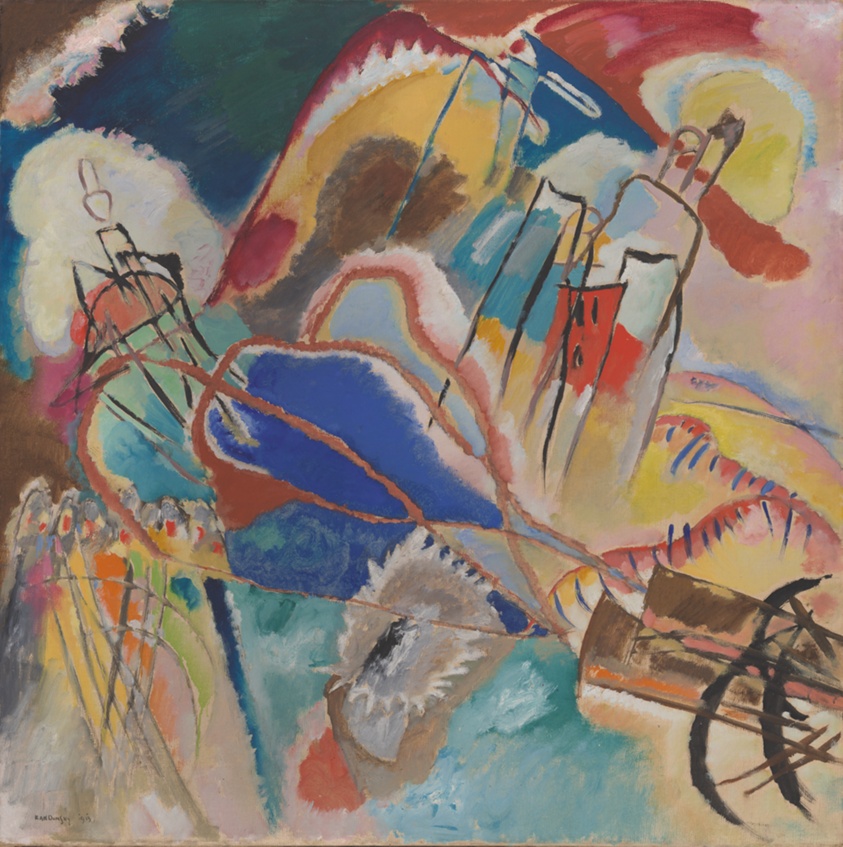 Vasily Kandinsky, "Improvisation No. 30 (Cannons)" -- Art Institute of Chicago, CC0 / Public Domain
What makes Abstract Art particularly interesting for architectural subjects is the shared language of geometry. Buildings are already composed of lines, angles, planes, and repeating patterns -- precisely the visual elements that abstraction celebrates and transforms.
Why Abstract Art Works for Architecture Photos
Abstract Art's visual DNA is built on variable, pure form -- a frequency profile that naturally complements architecture photography. Buildings are rich in geometric edges, straight lines, and repetitive structural patterns, providing exactly the kind of high-frequency content that Abstract Art's algorithms latch onto most effectively. Where a portrait might lose critical facial features in the abstraction process, a building's bold geometry becomes a launching pad for vibrant artistic reinterpretation.
The technical compatibility runs deeper than surface aesthetics. In neural style transfer, the algorithm extracts texture and pattern information from the style reference painting, then maps these features onto the content image's structural framework. Architecture photos provide unusually clear structural frameworks -- strong vertical and horizontal lines, well-defined planes, and regular geometric repetitions. Abstract Art's emphasis on pure form means the style features align naturally with these architectural structures rather than fighting against them.
"Intense study of the old masters and preoccupation with style also had the result that an artist would frequently paint in two or more relatively distinct styles, say one fine and one coarse, or one realistic and one more expressionistic and abstract." -- The Pelican History of Art, p. 184
This is why our ArtFID benchmarks list architecture among Abstract Art's best content types, alongside landscapes and flowers. The style's characteristics -- bold color fields, dynamic geometric compositions, and liberated linework -- find a natural home in the rigid geometry of buildings, bridges, and urban structures.
ArtFID Quality Score: Architecture + Abstract Art
ArtFID (Artistic Frechet Inception Distance) combines two metrics: LPIPS measures content preservation, FID measures style fidelity. ArtFID = (1 + LPIPS) x (1 + FID). Lower = better.
| Content Type | ArtFID | Stars | Verdict |
|---|---|---|---|
| Travel | 171.68 | 5 | Excellent -- top performer |
| Animals | 172.02 | 5 | Excellent -- near-top |
| Landscapes | 172.10 | 5 | Excellent -- ideal match |
| Interiors | 189.39 | 5 | Very strong results |
| Fantasy | 192.52 | 5 | Very strong results |
| Portraits | 213.03 | 5 | Strong despite complex features |
| Still Life | 215.07 | 5 | Solid performance |
| Vehicles | 227.30 | 5 | Good quality output |
| Seascapes | 227.35 | 5 | Good quality output |
| Night Scenes | 228.65 | 5 | Good quality output |
| Street Scenes | 230.02 | 5 | Good quality output |
| Food | 239.67 | 5 | Acceptable quality |
| Architecture | 248.22 | 5 | Strong artistic transformation |
| Flowers | 273.98 | 5 | Higher abstraction level |
| Urban Scenes | 281.65 | 5 | Maximum style intensity |
Architecture score: 248.22 (LPIPS = 0.4314, FID = 172.41) -- The relatively high LPIPS value (0.4314) indicates the algorithm aggressively transforms the source photo's visual structure, which is exactly what you want for an abstract effect. The FID of 172.41 confirms strong alignment with authentic Abstract Art paintings. This score places architecture in the upper-middle range -- you'll get dramatic, visually bold transformations rather than subtle stylistic overlays.
Before & After: Architecture in Abstract Art Style
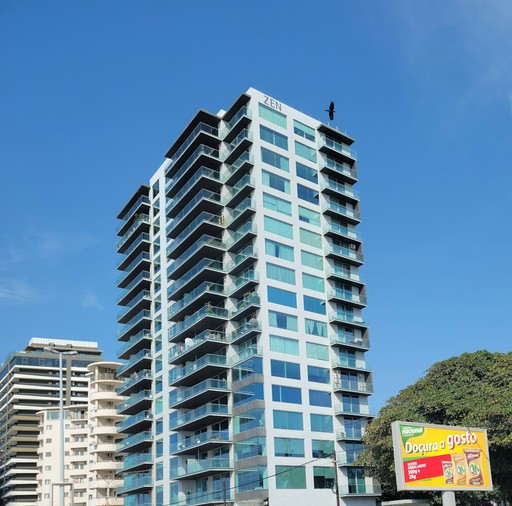
Every row below shows three images: the original photograph, an Abstract Art painting used as the style reference, and the AI-generated result.
Architecture -- 5 Stars (ArtFID 248.22)
Architecture's rigid geometry provides the perfect structural scaffold for Abstract Art's bold color fields and dynamic compositions. The straight lines and repeating patterns of buildings translate into visually compelling abstract arrangements that retain spatial depth while gaining painterly energy.
| Original Photo | Style Reference | AI Result |
|---|---|---|
 |
|
|
| Source photo | Improvisation No. 30 (Cannons) | ArtFID: 248.22 -- 5 Stars |
LPIPS: 0.4314 (content preservation) | FID: 172.41 (style fidelity)
Photography Tips for Best Abstract Art Results
-
Emphasize strong geometric lines. Buildings with clear vertical columns, horizontal beams, or diagonal staircases give the algorithm well-defined structural edges to work with, resulting in bolder abstract compositions.
-
Shoot symmetrical compositions. Symmetry in architecture -- think reflected facades, centered doorways, or arched corridors -- creates visual anchors that survive the abstraction process while gaining dramatic color treatment.
-
Use high-contrast lighting. Abstract Art thrives on strong value contrasts. Photograph buildings during golden hour or under harsh midday sun to provide the algorithm with distinct light/shadow boundaries that translate into vivid color separations.
-
Include repeating patterns. Windows, balconies, brick courses, and tiled roofs provide the repetitive high-frequency content that Abstract Art's style transfer handles exceptionally well. The more pattern regularity in your source photo, the more coherent the abstract output.
-
Avoid overly busy backgrounds. A clean sky or simple background behind your building helps the algorithm focus style transfer energy on the architecture itself. Cluttered foliage or complex cityscapes behind the subject can dilute the abstract effect.
How to Apply Abstract Art Style (3 Steps)
Step 1: Choose Your Photo
Upload any photograph to ArtRobot. Based on our ArtFID testing, travel, animals, and landscapes produce the best Abstract Art results -- but architecture delivers striking transformations with its bold geometric character.
Step 2: Select Abstract Art Style
Choose from classic Abstract Art paintings as the style reference. ArtRobot uses the ArtFlow algorithm (CVPR 2021), an invertible neural network that preserves your photo's content while transferring Abstract Art's artistic style.
Step 3: Download Your Art
ArtRobot generates your Abstract Art-style image in seconds. Download in multiple resolutions -- from social media sizes to print-ready 4K.
Try Abstract Art Style Transfer Free on ArtRobot ->
FAQ
How does Abstract Art style transfer work on architecture photos?
Abstract Art style transfer uses a neural network to extract texture patterns, color palettes, and compositional principles from reference paintings by artists like Kandinsky and Mondrian, then applies these features onto your architecture photo. The algorithm preserves your building's structural geometry (measured by LPIPS) while transforming surfaces, colors, and textures to match authentic Abstract Art aesthetics (measured by FID). Architecture is especially well-suited because its geometric lines provide clear structure for the style mapping process.
What ArtFID score does Abstract Art get on architecture?
Abstract Art achieves an ArtFID score of 248.22 on architecture photographs, with LPIPS at 0.4314 and FID at 172.41, earning a 5-star quality rating. This places architecture 13th out of 15 content categories tested -- but the higher score actually reflects more aggressive artistic transformation rather than lower quality. For comparison, the best-performing category (travel) scores 171.68. See our full Abstract Art Style Transfer analysis for complete benchmark data.
Is Abstract Art a good choice for architecture photography?
Yes -- Abstract Art is rated as having excellent compatibility with architecture photos. The style's emphasis on non-representational form, bold color, and geometric composition aligns naturally with architecture's structural geometry. Our testing confirms this with a solid 5-star rating. If you want the most dramatic results, pair Abstract Art with buildings that feature strong symmetry and repeating patterns. For a full comparison of styles that work well with buildings, see Best Art Styles for Architecture.
What architecture photo tips improve Abstract Art results?
Focus on strong geometric compositions with clear lines and high contrast lighting. Symmetrical facades, repetitive window patterns, and clean backgrounds all help the neural network produce more coherent abstract transformations. Avoid cluttered scenes or low-contrast flat lighting -- these reduce the structural information the algorithm needs to create compelling results. Golden hour photography works particularly well, as the warm directional light creates strong value separations that translate into vivid abstract color fields.
Can I try Abstract Art architecture style transfer for free?
Absolutely. ArtRobot offers free style transfer credits so you can test Abstract Art on your architecture photos before committing. Upload your building photograph, select an Abstract Art style reference (we recommend starting with Kandinsky's dynamic compositions), and preview the result in seconds. The same ArtFlow algorithm used in our ArtFID benchmarking powers every transformation you create on the platform.
Related Architecture Styles
Explore more art styles for architecture photography:
- Architecture Style Transfer Guide
- Abstract Art Style Transfer
- Best Art Styles for Architecture
- Wassily Kandinsky Style Transfer
- Piet Mondrian Style Transfer
- Kazimir Malevich Style Transfer
Try It Yourself
Architecture and Abstract Art share a common language of geometry, line, and form -- and neural style transfer bridges the gap between structural precision and painterly freedom. Whether you're transforming a Gothic cathedral or a modernist skyscraper, the results are consistently bold and visually striking.
Start Your Free Abstract Art Style Transfer on ArtRobot ->
Explore More
Try It Yourself
Transform your own photos into stunning paintings with 80+ artist styles. Free to start.