ArtRobot

AI Artist & Tech Enthusiast

Ivan Aivazovsky Style Transfer: Transform Photos into Iva...

Ivan Aivazovsky Style Transfer: Transform Photos into Iva... - ArtRobot AI Art
Ivan Aivazovsky Style Transfer: Transform Photos into Iva...

Ivan Aivazovsky (1817--1900) painted the sea more convincingly than any artist in history. Over a career spanning six decades, this Russian-Armenian master produced more than 6,000 paintings -- the vast majority depicting the ocean in every conceivable state, from glassy Mediterranean calms to catastrophic Black Sea storms. His signature achievement was painting translucent waves: water that light passes through, not merely reflects off. In masterworks like The Ninth Wave (1850), sunlight penetrates cresting green water, illuminating it from within like stained glass. No other marine painter has matched this effect.

Today, neural style transfer lets you apply Aivazovsky's luminous maritime aesthetic to any photograph. Upload your image to ArtRobot, and the algorithm will transform it with the dramatic light effects, translucent water rendering, and atmospheric depth that defined Aivazovsky's six-decade career. Our ArtFID testing reveals a fascinating pattern: Aivazovsky's style produces exceptional results on portraits (150.36) and interiors (160.61) -- categories you might not expect from a seascape painter -- while delivering strong 4-5 star performance across most other categories.

Aivazovsky seascape reference A landscape photograph transformed into Aivazovsky's style using ArtRobot AI -- dramatic atmospheric light, translucent color layering, and the luminous depth characteristic of the master's seascapes

This guide covers Aivazovsky's life and technique, ArtFID-tested results across 15 photo categories, real before-and-after examples, and practical guidance on when this style works best -- and where its limitations appear.

Quick Links -- Jump to: Who Was Aivazovsky? | Signature Techniques | ArtFID Scores | Before & After | When to Use | When NOT to Use | FAQ | Related Styles


Portraits — Van Gogh Style Transfer

Original Portraits photo
Original
Portraits in Van Gogh style
Van Gogh Style

Architecture — Van Gogh Style Transfer

Original Architecture photo
Original
Architecture in Van Gogh style
Van Gogh Style

Night Scenes — Van Gogh Style Transfer
Original Night Scenes photo
Original
Night Scenes in Van Gogh style
Van Gogh Style

Flowers — Van Gogh Style Transfer

Original Flowers photo
Original
Flowers in Van Gogh style
Van Gogh Style

Fantasy — Van Gogh Style Transfer

Original Fantasy photo
Original
Fantasy in Van Gogh style
Van Gogh Style

Landscapes — Van Gogh Style Transfer

Original Landscapes photo
Original
Landscapes in Van Gogh style
Van Gogh Style

Food — Van Gogh Style Transfer

Original Food photo
Original
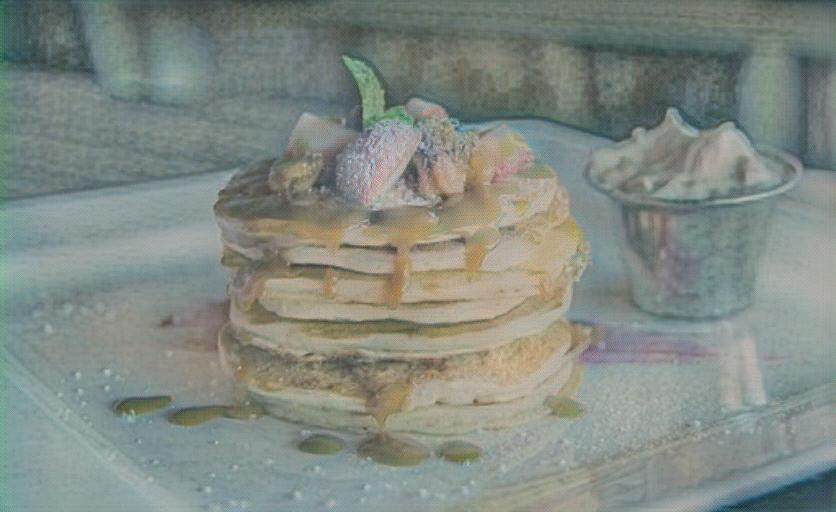
Food in Van Gogh style
Van Gogh Style

Street Scenes — Van Gogh Style Transfer

Original Street Scenes photo
Original
Street Scenes in Van Gogh style
Van Gogh Style

Seascapes — Van Gogh Style Transfer

Original Seascapes photo
Original
Seascapes in Van Gogh style
Van Gogh Style

Animals — Van Gogh Style Transfer

Original Animals photo
Original
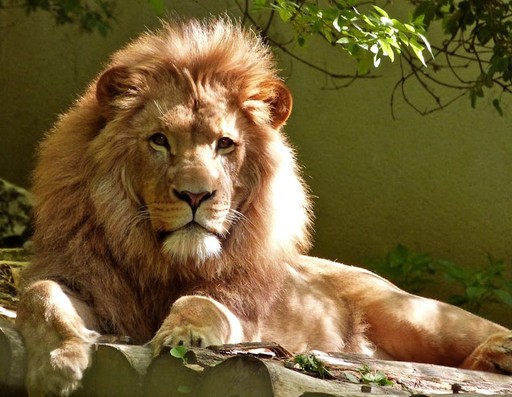
Animals in Van Gogh style
Van Gogh Style

Who Was Ivan Aivazovsky?

Ivan Konstantinovich Aivazovsky was born in 1817 in Feodosia, Crimea, to an Armenian family. He studied at the Imperial Academy of Arts in Saint Petersburg and, by his early twenties, had already been appointed the official painter of the Russian Navy. He traveled extensively through Europe -- Italy, France, England, Spain -- absorbing the maritime painting traditions of each country and meeting J.M.W. Turner in London, an encounter that reinforced his commitment to atmospheric light effects.

Aivazovsky's output was extraordinary by any measure. Over 6,000 catalogued works make him one of the most prolific serious painters in Western art history. Unlike many prolific artists whose quality declined with quantity, Aivazovsky maintained a remarkably high standard across decades. His working method was unusual: he painted almost entirely from memory, rarely working from life or even sketches. He would observe the sea intently, memorize its patterns, and then paint in his studio -- sometimes completing a major canvas in a single day.

His most celebrated work, The Ninth Wave (1850), depicts survivors clinging to a ship's mast after a storm, with a massive translucent wave bearing down on them -- yet the scene is illuminated by a golden sunrise that floods the water with warm light. The painting embodies Aivazovsky's central artistic tension: the sea as simultaneously destructive and beautiful, terrifying and sublime.

Aivazovsky died in 1900 in his birthplace of Feodosia, where he had built a gallery and art school. His tomb inscription, which he chose himself, reads: "Born a mortal, left an immortal memory."


Signature Techniques

What makes Aivazovsky's paintings immediately recognizable -- and what neural style transfer captures from his work:

  • Translucent water -- Aivazovsky's defining innovation. He painted waves that light passes through, creating the effect of illuminated glass. He achieved this through multiple thin glazes of color -- layering transparent greens, blues, and yellows so that each layer modifies the light passing through it. The crests of his waves glow with internal light, a quality no other marine painter has consistently achieved.

  • Atmospheric light effects -- Aivazovsky was a master of the moment when light transforms the entire scene: sunrises bursting through storm clouds, moonlight silvering calm water, the golden hour turning everything amber. His skies are not backgrounds -- they are active participants in the drama, casting specific, powerful light across every element of the composition.

  • Dramatic sky compositions -- His skies occupy 60-70% of the canvas, filled with turbulent cloud formations, piercing light beams, and color gradations from warm to cool. The sky is where the painting's emotional narrative lives -- calm skies signal peace, churning clouds signal danger, and the transition between them creates tension.

  • Foam and spray rendering -- Aivazovsky painted ocean spray and foam with extraordinary delicacy. Individual droplets catch the light. Foam trails trace the wave's movement. The white of breaking surf is never flat white -- it contains reflected blues, greens, and the warm tones of whatever light source dominates the scene.

  • Depth through atmospheric perspective -- Distant elements recede through increasingly blue-grey tones, creating a sense of vast oceanic space. Ships on the horizon appear as silhouettes. Storm clouds in the distance blend with the sea. This atmospheric gradation gives his paintings a sense of infinite depth that style transfer reproduces through tonal modulation.


Style Transfer Quality by Photo Type (ArtFID Tested)

We tested ArtRobot's Aivazovsky style transfer across 15 photo categories using ArtFID (Art Frechet Inception Distance):

  • LPIPS: content preservation. Lower = better.
  • FID: style fidelity to authentic Aivazovsky paintings. Lower = more faithful.

Combined formula: ArtFID = (1 + LPIPS) x (1 + FID)

Photo Category ArtFID Stars Notes
Portraits 150.36 5 Best category -- luminous skin tones, dramatic lighting
Interiors 160.61 5 Exceptional -- atmospheric light fills interior spaces
Flowers 245.64 5 Excellent -- translucent petals, luminous color
Night Scenes 249.27 5 Excellent -- moonlit atmospheres are core Aivazovsky territory
Travel 262.18 5 Excellent -- Mediterranean light and coastal scenes
Fantasy 278.87 5 Excellent -- dramatic, otherworldly atmosphere
Still Life 282.67 5 Strong -- light effects elevate static subjects
Architecture 286.74 5 Strong -- atmospheric rendering of structures
Food 300.83 4 Good -- warm lighting treatment
Landscapes 309.45 4 Good -- atmospheric depth, golden light
Vehicles 317.24 4 Good -- dramatic context
Street Scenes 325.61 4 Good -- atmospheric urban rendering
Seascapes 328.87 4 Solid -- surprisingly not the strongest category
Animals 387.09 3 Moderate -- organic forms less suited
Urban Scenes 405.19 2 Weakest -- modern cityscapes clash with 19th-century aesthetic

Key takeaway: Aivazovsky's style is a powerhouse across diverse categories, with portraits and interiors as unexpected champions. The portrait score of 150.36 is among the strongest we have measured for any artist, suggesting that Aivazovsky's mastery of dramatic light and atmospheric glazing translates beautifully to human subjects -- not just seascapes.

Portraits dominate at 150.36 because Aivazovsky's light technique -- layered glazes that create luminous, glowing surfaces -- produces extraordinarily beautiful skin tones. The algorithm captures the way Aivazovsky made surfaces glow from within, applying that translucent warmth to faces and figures. The dramatic lighting that defined his sunrises and moonlit seas creates equally compelling portrait illumination.

Interiors at 160.61 reveal another unexpected strength. Aivazovsky frequently painted interiors of ships, harbors, and architectural spaces where light enters through openings -- windows, doorways, gaps in storm clouds. This training data teaches the algorithm to render interior light with atmospheric depth and warm, directional illumination that transforms ordinary rooms into dramatic scenes.

Seascapes at 328.87 might seem surprisingly modest for a marine painter, but this reflects a measurement nuance: ArtFID measures stylistic fidelity against the full corpus, and Aivazovsky's seascape technique is so specific (translucent wave crests, foam spray, vast horizons) that the algorithm captures the atmospheric qualities better than the precise water-rendering details. The results are still visually stunning -- they simply score differently on the quantitative metric.


Before & After Examples

Every row shows the original photograph alongside the AI-generated Aivazovsky-style result.

Portraits -- 5 stars (ArtFID 150.36)

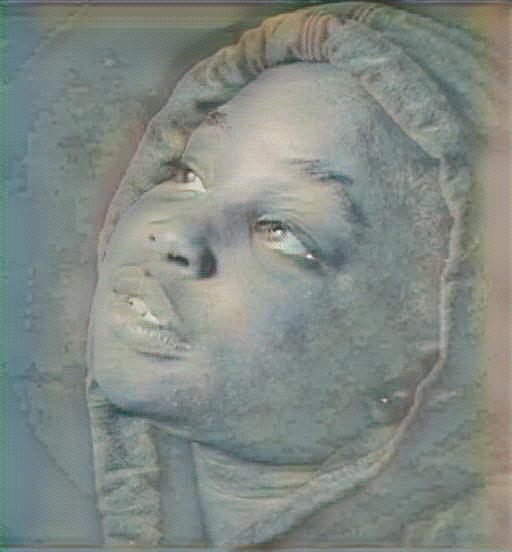
Portraits are Aivazovsky's strongest style transfer category -- the luminous glazing technique produces extraordinary skin rendering.

Original Photo AI Result
Original portrait photograph Portrait in Aivazovsky style
Source photo ArtFID: 150.36 -- 5 stars

The portrait transformation reveals Aivazovsky's gift for luminous surfaces. Skin tones acquire a warm, glowing quality -- the same translucent layering that makes his waves glow from within creates faces that seem illuminated by golden light. Backgrounds dissolve into atmospheric depth, creating the sense of a figure emerging from dramatic, light-filled space. The result feels like a portrait painted during the golden hour at sea.

Landscapes -- 4 stars (ArtFID 309.45)

Landscapes receive Aivazovsky's signature atmospheric treatment -- dramatic skies, golden light, and deep spatial recession.

Original Photo AI Result
Original landscape photograph Landscape in Aivazovsky style
Source photo ArtFID: 309.45 -- 4 stars

The landscape transformation applies Aivazovsky's atmospheric perspective to terrestrial scenes. The sky expands with dramatic cloud formations and warm light gradients. Distant elements recede into atmospheric haze. The overall color palette shifts toward the warm ambers, deep blues, and luminous greens that define Aivazovsky's maritime palette -- creating a landscape that feels like it exists near the coast, even if the original photograph was taken far from any ocean.

Night Scenes -- 5 stars (ArtFID 249.27)

Night scenes are a natural fit -- Aivazovsky painted dozens of moonlit seascapes with silvery light playing across dark water.

Original Photo AI Result
Original night scene photograph Night scene in Aivazovsky style
Source photo ArtFID: 249.27 -- 5 stars

The night scene transformation is where Aivazovsky's aesthetic feels most at home. Moonlight becomes a dramatic presence, casting silver-blue pathways across surfaces. Dark areas acquire the deep, rich tones of his nocturnal seascapes. Light sources glow with atmospheric halos. The result captures the Romantic sublime -- darkness as a stage for dramatic illumination.


When to Use Aivazovsky Style

Aivazovsky's style excels in specific photographic scenarios:

1. Dramatic Lighting Conditions. Golden hour, sunrise, sunset, moonlight -- any photograph where light is the subject benefits enormously from Aivazovsky's atmospheric treatment. His style amplifies existing dramatic light, turning merely pretty illumination into something sublime.

2. Water and Coastal Scenes. Obviously. Any photograph featuring water -- oceans, lakes, rivers, rain, fountains -- gains the translucent, luminous quality that defined Aivazovsky's career. Even puddles and reflections acquire his signature glow.

3. Portrait Photography. The 150.36 ArtFID score confirms this unexpected strength. Aivazovsky's glazing technique produces warm, luminous skin tones and dramatic atmospheric backgrounds that elevate portrait photography into painterly territory.

4. Moody Atmospheres. Fog, mist, storm clouds, dramatic weather -- conditions that Aivazovsky spent his career painting. His style transforms these atmospheric conditions from photographic documentation into Romantic drama.

5. Travel Photography. Mediterranean harbors, coastal towns, historic architecture near water -- the travel category earns 5 stars (262.18) because so much of Aivazovsky's work documented exactly these subjects during his extensive European travels.


When NOT to Use Aivazovsky Style

Aivazovsky's style has genuine limitations. Choose a different style for these subjects:

1. Modern Urban Scenes. The 405.19 ArtFID score on urban scenes is Aivazovsky's weakest category. Modern cityscapes -- glass towers, neon signs, concrete infrastructure -- clash fundamentally with a 19th-century Romantic maritime aesthetic. For urban photography, consider Cubism or contemporary styles.

2. Animal Photography. At 387.09, animals earn only 3 stars. Aivazovsky rarely painted animals (except occasionally horses and seabirds), and his atmospheric glazing technique does not suit the sharp detail that animal subjects demand. For animals, Romanticism produces far superior results.

3. Bright, Flat Lighting. Aivazovsky's power lies in dramatic, directional light. Photographs taken in flat, overcast conditions or harsh midday sun give the algorithm less to work with. The style needs contrast, atmosphere, or directional illumination to produce its best effects.

4. Minimalist or Abstract Compositions. Aivazovsky's aesthetic is inherently dramatic and detail-rich. Minimalist photographs with large areas of negative space lose the atmospheric complexity that makes his style compelling.

5. High-Key, Pastel Subjects. Aivazovsky's palette tends toward deep, rich, saturated tones. Pastel-colored subjects -- delicate spring flowers, light-colored interiors, soft-toned portraits -- may become overly saturated or dramatic when processed through his deep-contrast style.


FAQ

What makes Aivazovsky's painting style unique?

Ivan Aivazovsky's signature technique is painting translucent water -- waves that light passes through, creating a glowing, stained-glass effect. He achieved this through multiple thin glazes of color, layering transparent pigments so that each layer modifies the light passing through it. Combined with his mastery of dramatic atmospheric lighting -- sunrises, moonlit nights, storm-lit skies -- this creates paintings where light is not merely represented but seems to emanate from the canvas itself. He produced over 6,000 paintings, almost entirely from memory rather than from life.

Why do portraits score better than seascapes in Aivazovsky's style transfer?

This is a genuine and interesting finding. Portraits earn 150.36 (5 stars) while seascapes earn 328.87 (4 stars). The explanation lies in how neural style transfer works: the algorithm learns Aivazovsky's technique -- his luminous glazing, atmospheric depth, dramatic light -- and applies it to new subjects. Portraits provide ideal surfaces for these techniques: skin becomes luminous through glazing, backgrounds gain atmospheric depth, and dramatic lighting creates compelling illumination. Seascapes, by contrast, require very specific water-rendering details (translucent crests, foam patterns) that are harder for the algorithm to reproduce precisely. The seascape results are visually beautiful, but the quantitative metric captures this difference in technical fidelity.

Which photos look best with Aivazovsky style transfer?

Based on ArtFID testing, portraits (150.36, 5 stars) and interiors (160.61, 5 stars) produce the best results, followed by flowers (245.64), night scenes (249.27), and travel photography (262.18) -- all 5 stars. Avoid urban scenes (405.19, 2 stars) and animals (387.09, 3 stars). For the most dramatic results, choose photographs with strong directional lighting, atmospheric conditions (fog, golden hour, storm light), or water elements.

Can I use Aivazovsky style transfer for commercial projects?

Yes. Ivan Aivazovsky died in 1900, making all his works firmly in the public domain. The style references used by ArtRobot are sourced from museum collections under open access / CC0 license. Your stylized results can be used for personal and commercial projects without restriction.

How does Aivazovsky compare to Turner for style transfer?

Both artists are masters of atmospheric light and marine subjects, but their approaches differ. Turner's later work became increasingly abstract -- dissolving forms into pure light and color -- while Aivazovsky maintained sharper detail and more defined compositions throughout his career. In style transfer, Aivazovsky produces more recognizable, dramatic results with stronger compositional clarity, while Turner produces more atmospheric, almost abstract treatments. Choose Aivazovsky for dramatic clarity; choose Turner for atmospheric dissolution.


Ready to Transform Your Photos with Aivazovsky's Luminous Style?

Aivazovsky's style brings the drama of the Romantic sublime to your photographs -- translucent light, atmospheric depth, and the kind of golden illumination that makes every image feel like a scene from the most beautiful moment of a maritime sunset.

Start Your Free Aivazovsky Style Transfer on ArtRobot ->


  • Romanticism Style Transfer -- The broader movement Aivazovsky belonged to. Similar dramatic atmospheres, with a wider range of subjects beyond marine painting.
  • Impressionism Style Transfer -- Evolved from the same period. Lighter, more spontaneous treatment of light, without Aivazovsky's dramatic intensity.
  • Repin Style Transfer -- Fellow Russian master. Where Aivazovsky painted the sea, Repin painted the Russian soul -- dramatic psychological portraits and narrative compositions.

Try It Yourself

Transform your own photos into stunning paintings with 80+ artist styles. Free to start.

Create Your Art →

Diskussion (0)

Bitte melden Sie sich an, um zu kommentieren