
AI Artist & Tech Enthusiast
Abstract Art Photo Effect — AI Style Transfer Guide (2026)
What does a photograph look like when you strip away everything it represents and keep only the visual forces -- color, line, shape, rhythm, tension? That is the question abstract art has asked since 1910, when Wassily Kandinsky painted what is generally considered the first purely abstract work and severed the cord between painting and recognizable subject matter. For the first time in the history of Western art, a painting did not need to look like anything. It could simply be -- a composition of colors and forms that existed for their own sake, the way a piece of music exists without representing anything visible.
Today, neural style transfer lets you turn a photo into abstract art by applying the visual principles of Kandinsky, Piet Mondrian, Kazimir Malevich, and Jackson Pollock to any photograph. Upload your image to ArtRobot, and the algorithm will dissolve its representational content into pure abstraction -- geometric grids, biomorphic forms, explosive drip patterns, or luminous color fields, depending on which abstract tradition the model draws upon. Your photograph becomes the raw material for a transformation that asks: what does this image feel like, once you stop asking what it looks like?
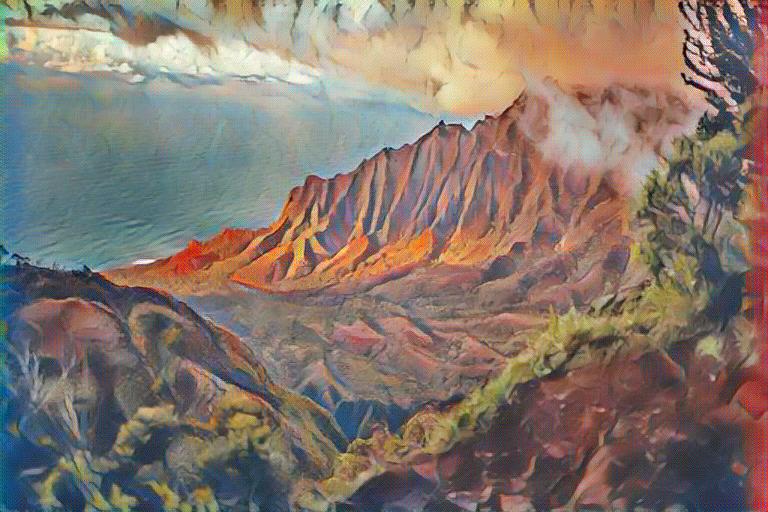
A landscape photograph transformed into abstract art using ArtRobot AI -- representational content dissolved into pure color relationships, geometric forms, and compositional rhythm
This guide covers abstract art's revolutionary history, its key artists, real before-and-after examples, and honest guidance on when abstract style transfer produces striking results -- and when it loses too much of the original image.
Quick Links -- Jump to: What is Abstract Art? | Key Artists | Before & After | When to Use | When NOT to Use | FAQ | Related Styles
What is Abstract Art?
Abstract art -- also called non-objective, non-figurative, or non-representational art -- is art that does not attempt to depict recognizable subjects from the visible world. Instead, it uses color, form, line, and composition as its subjects. Developed independently by several artists in the early 1910s -- Kandinsky in Munich, Malevich in Moscow, Mondrian in the Netherlands -- abstraction was arguably the most radical innovation in the entire history of Western art. For 30,000 years, from the cave paintings of Lascaux to the Impressionists, art had always represented something. Abstract art said: no more.
The key characteristics that define abstract art and that neural style transfer captures:
- Non-representation -- The fundamental principle. Abstract art does not depict recognizable objects, scenes, or figures from the visible world. A Mondrian painting is not a simplified version of a landscape -- it is a composition of colored rectangles that has no referent outside itself. In style transfer, this principle manifests as the dissolution of the photograph's representational content into pure visual elements.
- Color as autonomous force -- In representational art, color serves description: the sky is blue, the grass is green. In abstract art, color is freed from descriptive duty and operates as an independent expressive force. Kandinsky theorized that colors have psychological and even spiritual properties -- yellow is aggressive, blue is spiritual, red is powerful. Color relationships create tension, harmony, movement, and emotion without representing anything.
- Geometric abstraction -- One major branch of abstract art uses geometric forms -- rectangles, circles, lines, grids -- as its primary vocabulary. Mondrian's compositions of red, yellow, blue, black, and white rectangles are the purest expression of this approach. Malevich's Black Square (1915) reduced painting to the most elemental geometric form. Geometric abstraction pursues order, purity, and universal harmony.
- Gestural abstraction -- The other major branch uses the physical act of painting itself as subject matter. Pollock's drip paintings are records of his body moving around and above the canvas, flinging and pouring paint in rhythmic, dance-like movements. De Kooning's slashing brushstrokes, Franz Kline's monumental black-and-white gestures -- gestural abstraction treats the painting as a trace of physical action, raw and immediate.
- Emotional and spiritual expression -- For Kandinsky, abstraction was a spiritual practice -- painting freed from material representation could directly express inner states, the way music does. For the Abstract Expressionists, abstraction was emotional catharsis -- the canvas was an arena for psychological drama. This capacity to communicate feeling without depicting anything is abstract art's most profound and most controversial claim.
Abstract art's influence is total. It reshaped not just painting but architecture (Bauhaus, De Stijl), graphic design (Swiss typography, grid systems), industrial design, fashion, and digital interface design. The grid layout of every website you have ever visited descends from Mondrian. The color theory underlying every brand identity descends from Kandinsky and Josef Albers. When you turn a photo into abstract art, you are engaging with the visual language that built the modern visual world.
Key Abstract Art Artists
Wassily Kandinsky (1866--1944)
Kandinsky is generally credited with creating the first purely abstract painting around 1910--1911, and he remains abstraction's most eloquent theorist. His book Concerning the Spiritual in Art (1911) argued that painting, like music, should express inner spiritual realities rather than external appearances. His early abstractions (Composition VII, 1913) are explosions of color and biomorphic form -- dynamic, musical, bursting with energy. His later Bauhaus-period works (Composition VIII, 1923) become more geometric and precise, organizing circles, triangles, and lines into compositions of mathematical elegance.
For style transfer, Kandinsky's influence produces the most colorful, dynamic, and compositionally complex abstract results. His contribution introduces vivid, non-naturalistic color, floating geometric and biomorphic shapes, and a sense of musical rhythm -- forms that seem to dance, vibrate, and resonate across the canvas.
Piet Mondrian (1872--1944)
Mondrian pursued abstraction to its logical endpoint: the reduction of all visual experience to horizontal and vertical lines and the three primary colors plus black and white. His mature "Neo-Plasticism" compositions -- grids of black lines enclosing rectangles of red, yellow, blue, and white -- are among the most recognizable images in art history. They are also among the most radical: Mondrian believed that this vocabulary of pure geometric relationships expressed universal harmony and spiritual order.
Mondrian's style transfer influence produces the most geometrically severe results -- grid structures, rectangular color blocks, and the distinctive restriction to primary colors plus black and white. His contribution is immediately recognizable and works best on subjects with existing geometric structure (architecture, urban scenes).
Kazimir Malevich (1879--1935)
Malevich founded Suprematism -- "the supremacy of pure artistic feeling" -- and produced some of abstraction's most iconic and most austere works. Black Square (1915) is simply that: a black square on a white background. White on White (1918) pushes further: a white square slightly rotated on a white background. These works are not minimalist decorations -- they are radical philosophical propositions about the nature of art, perception, and meaning. Malevich's Suprematist compositions of floating geometric forms -- crosses, circles, rectangles in dynamic arrangements -- influenced everything from El Lissitzky's graphic design to contemporary logo design.
Malevich's style transfer influence introduces floating geometric shapes against neutral backgrounds, a sense of weightless space, and the tension between geometric precision and dynamic, off-axis composition. His contribution produces results with dramatic simplicity -- bold forms suspended in ambiguous spatial depth.
Jackson Pollock (1912--1956)
Pollock demolished every remaining convention about how painting should be made. He placed his canvases on the floor and moved around and above them, dripping, pouring, and flinging paint in continuous, rhythmic gestures. The resulting "drip paintings" -- Number 1A, 1948, Autumn Rhythm, Lavender Mist -- are dense, all-over compositions with no focal point, no hierarchy, and no representation. They are records of physical action -- "action paintings" -- in which the painter's body, not the painter's eye, is the primary instrument.
For style transfer, Pollock's influence produces the most textural, all-over, and energetically dense results. His contribution introduces layered drip patterns, complex interwoven lines, explosive splatters, and a sense of physical energy captured in pigment. Pollock's effect works across all subject categories because his technique transforms the entire surface uniformly -- the source composition is submerged beneath a dense field of gestural marks.
Before & After Examples
Every row shows the original photograph alongside the AI-generated abstract art result.
Landscapes
Landscapes undergo the most dramatic transformation -- representational space dissolves into pure abstract composition.
| Original Photo | AI Result |
|---|---|
 |
|
| Source photo | Abstract art style transfer |
The landscape transformation demonstrates abstraction's fundamental operation: the dissolution of representation into pure visual elements. The horizon line may persist as a geometric division, but sky and land lose their identity as recognizable subjects. Colors detach from descriptive duty -- greens are no longer "grass green" but autonomous color forces interacting with adjacent hues. The result is a composition that retains the original photograph's color palette and basic spatial structure while abandoning its representational content.
Portraits
Portraits reveal the tension between abstraction and recognition -- how far can you abstract a face before it stops being a face?
| Original Photo | AI Result |
|---|---|
 |
 |
| Source photo | Abstract art style transfer |
The portrait transformation pushes representation toward its dissolving point. Facial features may persist as geometric shapes or color zones, but the face as a recognizable identity becomes secondary to the abstract composition of forms and colors that the face generates. Skin tones become autonomous color fields. Eyes become geometric focal points. The result exists in the tension zone between portrait and pure abstraction -- a face that is becoming something else.
Architecture
Architecture is abstract art's natural subject -- buildings are already geometric, already composed of lines and planes.
| Original Photo | AI Result |
|---|---|
 |
 |
| Source photo | Abstract art style transfer |
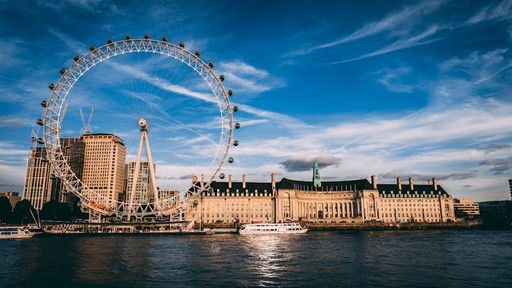
The architectural transformation reveals the deep affinity between abstract art and architecture. Building facades become Mondrian-like grids. Windows become colored rectangles. Structural lines become the black dividers of a Neo-Plastic composition. Architecture already abstracts the natural world into geometry -- abstract style transfer simply completes that process, pushing architectural photographs across the threshold from representation into pure geometric composition.
When to Use Abstract Art Style Transfer
Abstract style transfer produces the strongest results in these contexts:
1. Wall Art and Interior Decor. Abstract art has dominated interior design since the mid-20th century because it harmonizes with living spaces without competing with them narratively. A landscape photograph tells a story; an abstract composition provides visual energy, color, and rhythm without narrative content. Abstract style transfer turns personal photographs into wall-ready art that complements rather than dominates a room.
2. Brand Identity and Marketing. Abstract imagery communicates modernity, sophistication, and creativity. It works particularly well for technology companies, design firms, creative agencies, and lifestyle brands that want visual identity elements that feel contemporary and forward-thinking. An abstract-transformed product photograph can serve as a background texture, hero image, or brand pattern.
3. Album Art and Creative Projects. Abstract art's association with emotional expression and avant-garde culture makes it ideal for music packaging, poetry collections, art books, and experimental publications. The style communicates creative seriousness and visual sophistication.
4. Emotional Expression Without Narrative. Sometimes you want an image to communicate a feeling -- energy, calm, tension, joy -- without telling a specific story. Abstract style transfer strips away the narrative content of a photograph and amplifies its emotional qualities through pure color and form. A sunset becomes not "a sunset" but a field of warm color that radiates the feeling of warmth and light.
5. Architecture and Urban Photography. Buildings, bridges, cityscapes, and urban infrastructure are already geometric. Abstract style transfer completes the abstraction that architecture begins, producing results that feel like natural extensions of the source material rather than forced transformations. Mondrian himself arrived at his grid compositions by progressively abstracting tree and facade drawings.
When NOT to Use Abstract Art Style Transfer
Abstraction's radical transformation of content creates genuine limitations:
1. Any Photograph Where Subject Recognition Matters. By definition, abstract art dissolves recognizable subjects into pure form and color. If the viewer needs to recognize who, what, or where the image depicts -- portraits for identification, product photography, real estate -- abstraction destroys the essential information. This is not a flaw; it is the point. But it is a limitation for practical purposes.
2. Sentimental or Commemorative Images. Wedding photos, family portraits, and memorial images derive their value from recognizable content -- the specific people, places, and moments they depict. Abstract style transfer dissolves precisely the content that gives these images meaning. For sentimental subjects, use Impressionism or Romanticism, which soften and beautify while preserving recognition.
3. Detailed or Complex Source Images. Abstract style transfer works best with simple, bold compositions -- a single building against a sky, a face against a dark background, a flower against green leaves. Complex, busy source images with many competing elements produce chaotic abstract results that lack compositional clarity. Simplify your source image for the best abstract output.
4. Small Print Sizes. Abstract art's impact depends on the viewer engaging with color relationships, geometric tensions, and compositional rhythms. At thumbnail size, these subtleties collapse into visual noise. Abstract results are designed for large-format appreciation -- prints, projections, desktop wallpapers -- not social media thumbnails or phone screen previews.
5. Projects Requiring Photographic Credibility. Journalism, documentation, evidence, scientific imagery -- any context where the photograph serves as a reliable record of visual reality is incompatible with abstraction. The style's entire purpose is to replace visual reality with visual experience.
FAQ
How do I turn a photo into abstract art?
Upload your photograph to ArtRobot and select the Abstract Art style. The AI model will analyze your image's color palette, compositional structure, and visual rhythm, then transform it using the visual principles of Kandinsky, Mondrian, Malevich, and Pollock. The result dissolves your photograph's representational content into pure abstraction -- geometric forms, color fields, gestural marks, and compositional rhythms that retain the original's visual energy while abandoning its literal subject matter.
What is the difference between abstract art and other art styles?
The fundamental difference is representation. Impressionism, Romanticism, Pointillism, and most other art styles transform how a subject looks while preserving what it is -- you can still recognize the landscape, the face, the building. Abstract art transforms the subject into pure visual elements -- color, shape, line, rhythm -- so that the "what" dissolves into "how it feels." Abstract style transfer produces the most radical transformation of any style available.
Which photos work best for abstract art style transfer?
Simple, bold compositions with strong color contrasts and clear geometric structure produce the best abstract results. Architecture is the strongest category -- buildings are already geometric compositions that translate naturally into abstraction. Landscapes with clear horizon lines, bold color zones (sunset skies, ocean horizons), and simple foreground/background divisions also work well. Avoid busy, cluttered images with many competing elements.
What is the difference between geometric and gestural abstraction?
Geometric abstraction (Mondrian, Malevich) uses precise geometric forms -- rectangles, circles, straight lines, grids -- to create compositions of mathematical order. Gestural abstraction (Pollock, de Kooning) uses the physical act of painting -- dripping, pouring, slashing -- to create compositions of raw physical energy. ArtRobot's abstract style transfer draws on both traditions, and the balance between geometric precision and gestural energy varies depending on the source photograph's content and structure.
Can I control how abstract the result is?
ArtRobot's style transfer applies a balanced level of abstraction that preserves some structural elements of the original composition (basic spatial division, dominant color relationships) while dissolving representational detail. For photographs where you want less extreme transformation -- preserving more recognizable content -- consider Cubism, which fragments subjects geometrically while keeping them partially recognizable, or Expressionism, which distorts subjects emotionally while preserving their identity.
Ready to Turn Your Photo into Abstract Art?
Abstract art strips photography down to its visual essentials -- pure color, form, and rhythm freed from the obligation to represent anything. It is the most radical transformation available in style transfer, and it produces results that function as autonomous works of art rather than filtered photographs.
Start Your Free Abstract Art Style Transfer on ArtRobot ->
Related Styles
- Cubism Style Transfer -- Abstraction's closest relative. Cubism fragments subjects geometrically but retains partial recognizability -- the halfway point between representation and pure abstraction.
- Surrealism Style Transfer -- Shares abstraction's rejection of conventional reality, but through dreamlike imagery rather than non-representation.
- Pointillism Style Transfer -- Shares abstraction's interest in color as autonomous force, but maintains representational content through optical dot mixing.
- Dada Style Transfer -- Shares abstraction's rejection of artistic convention, but through anti-art provocation rather than pure visual exploration.
Try It Yourself
Transform your own photos into stunning paintings with 80+ artist styles. Free to start.