
AI Artist & Tech Enthusiast
Sunsets Style Transfer: Complete Guide with AI Quality Ra...

A sunset photograph already holds extraordinary visual power -- warm color gradients bleeding across the sky, silhouettes anchoring the foreground, atmospheric glow that shifts from gold to crimson in minutes. But applying the right art style through sunsets style transfer can elevate that power into something that feels genuinely hand-painted, carrying the emotional weight of a gallery canvas. The wrong style, however, destroys exactly what makes a sunset compelling. The difference is measurable: ArtFID (Artistic Frechet Inception Distance) scores reveal which artistic traditions harmonize with sunset imagery and which ones fight against it.
This guide ranks the top art styles for sunset photography based on ArtFID quality testing, walks through real before-and-after comparisons, identifies styles to avoid, and provides practical shooting tips to maximize your results.
Why Sunsets Photos Need the Right Art Style
Sunset photographs occupy a very specific position in the frequency spectrum of image data. Their dominant visual traits -- warm color gradients that sweep across the sky, atmospheric glow that diffuses light through haze and clouds, and dark silhouettes that create stark tonal contrast -- produce what researchers classify as a low-frequency profile. The critical information in a sunset image lives in broad, slowly-varying color fields rather than in sharp edges or intricate surface textures.
J.M.W. Turner understood this intuitively two centuries before neural networks existed. As art historian Hugh Honour describes Turner's approach: "Mists which transform and unite disparate objects visually, and skies in shot reds and yellows with the deep radiance of the rising or setting sun, are natural paradigms of the art of painting, and eventually Turner seems almost to have identified the pigments which he applied to paper or canvas with the atmospheric colouring which hangs between the artist and the object depicted" (History of Art, p.496). Turner was working with exactly the same low-frequency visual phenomena that define sunset photography today.
Neural style transfer algorithms work by aligning the statistical distributions of feature maps between your content image and a reference style painting. The Gram matrices extracted from deep neural network layers encode both the texture patterns of an art style and the structural geometry of your photograph. When those frequency profiles are naturally compatible -- when the style's texture operates in the same broad, flowing register as a sunset's color gradients -- the result preserves atmospheric depth and color transitions seamlessly. When they clash, gradients turn muddy, silhouettes dissolve, and the luminous glow that defines the sunset vanishes entirely.
Research in content-style compatibility confirms this pattern: "Low-frequency content like landscapes, clouds, and large color fields demonstrates high data compatibility with Impressionism, Fauvism, and other low-frequency art styles. The Gram matrices of such content images typically exhibit a 'low-rank' property that accommodates the broad-stroke color distribution alignment found in these styles" (NST Compatibility Research, p.3). Sunsets are the purest expression of this low-frequency category, which is why the ArtFID rankings below show such dramatic differences between compatible and incompatible styles.
Top 5 Styles for Sunsets (Ranked)
Based on ArtFID testing against sunset imagery, these five art styles deliver the strongest results. Lower ArtFID means better overall quality -- the algorithm successfully captures the reference style while preserving the content structure of your sunset photograph.
1. Impressionism -- The Natural Partner for Sunset Light (ArtFID 251.34)
| Feature | Detail |
|---|---|
| ArtFID Score | 251.34 (best) |
| Frequency Profile | Mid-low frequency, high color saturation |
| Rating | 5 stars |
| Best For | Golden hour warmth, cloud formations, water reflections |
Impressionism earns the top ranking for sunset style transfer, and the reason is almost self-evident: the Impressionist movement was born from the obsession with capturing natural light at specific moments in time. Monet, Renoir, and Pissarro built their entire practice around the transient color effects that sunset light produces -- warm oranges dissolving into cool purples, broken reflections on water, the way atmosphere scatters light into a spectrum of complementary hues.
The mid-low frequency texture of Impressionist brushwork aligns almost perfectly with the low-frequency gradients of sunset photography. The broken-color technique fragments broad color fields into mosaics of warm and cool tones without destroying the underlying gradient structure. Your sunset retains its atmospheric sweep while gaining the vibrant, light-saturated quality that defines the movement.
2. Ukiyo-e -- Japanese Woodblock Meets Western Sunsets (ArtFID 302.71)
| Feature | Detail |
|---|---|
| ArtFID Score | 302.71 |
| Frequency Profile | Mid frequency, flat color areas with line work |
| Rating | 4 stars |
| Best For | Dramatic silhouettes, layered cloud formations, ocean sunsets |
Ukiyo-e woodblock printing has a natural affinity with sunset imagery that dates back to Hiroshige's famous Thirty-six Views of Mount Fuji series, where crimson skies and layered atmospheric effects were rendered through flat color planes and precise outlines. The style's characteristic approach -- broad areas of saturated flat color separated by clean contour lines -- translates sunset gradients into bold, graphic compositions that feel both ancient and strikingly modern.
The ArtFID score of 302.71 reflects strong compatibility. Sunset silhouettes become the clean dark shapes that Ukiyo-e thrives on, while sky gradients transform into the layered color bands that define the woodblock aesthetic. The result carries the contemplative stillness of Japanese landscape art.
3. Early Renaissance -- Luminous Warmth and Sacred Light (ArtFID 316.16)
| Feature | Detail |
|---|---|
| ArtFID Score | 316.16 |
| Frequency Profile | Mid frequency, balanced detail |
| Rating | 4 stars |
| Best For | Sunsets with architectural elements, structured horizons, golden-hour warmth |
Early Renaissance painters like Fra Angelico were masters of luminous color -- their gold-leaf backgrounds and radiant skies were designed to evoke divine light. When applied to sunset photography through the sunsets Early Renaissance photo effect, the algorithm captures that same quality of sacred luminosity. Warm tones deepen into rich golds and soft crimsons that feel less like a filtered photograph and more like a painted altarpiece.
The mid-frequency balanced detail preserves foreground structure -- trees, buildings, horizon lines -- while the style's characteristic warmth amplifies the sunset's natural color temperature. The ArtFID score of 316.16 confirms strong content-style compatibility.
4. Van Gogh -- Turbulent Skies and Emotional Intensity (ArtFID 355.93)
| Feature | Detail |
|---|---|
| ArtFID Score | 355.93 |
| Frequency Profile | Mid-low frequency, directional brushstrokes |
| Rating | 3 stars |
| Best For | Dramatic cloud formations, emotional scenes, vibrant color contrasts |
Van Gogh painted some of the most iconic sunset and twilight skies in art history. His bold, directional brushstrokes and intense color contrasts transform sunset photographs into emotionally charged compositions where the sky becomes a living, swirling force. The characteristic curving strokes that define works like The Starry Night and Cafe Terrace at Night map naturally onto sunset cloud formations, amplifying their drama without destroying their atmospheric structure.
At an ArtFID of 355.93, Van Gogh style transfer delivers solid results with sunset imagery. The mid-low frequency brushwork preserves broad color gradients while adding rhythmic texture that makes the sky feel dynamic and alive.
5. Baroque -- Chiaroscuro Drama for Sunset Contrast (ArtFID 377.27)
| Feature | Detail |
|---|---|
| ArtFID Score | 377.27 |
| Frequency Profile | Low-mid frequency, strong chiaroscuro |
| Rating | 3 stars |
| Best For | High-contrast sunsets, dramatic light/shadow scenes, backlit compositions |
Baroque painting thrives on the dramatic interplay between light and darkness -- the chiaroscuro technique pioneered by Caravaggio and perfected by Rembrandt. Sunset photography naturally produces exactly this kind of high-contrast lighting: blazing sky against dark foreground silhouettes, shafts of light cutting through clouds, and the intense tonal range from deep shadow to brilliant highlight.
The low-mid frequency profile of Baroque style aligns well with sunset gradients, and the chiaroscuro emphasis amplifies the natural drama inherent in sunset lighting. The result feels theatrical in the best sense -- a sunset that commands attention with the authority of a Baroque altarpiece.
Full top 10 ArtFID rankings:
| Rank | Style | ArtFID | LPIPS | FID | Stars |
|---|---|---|---|---|---|
| 1 | Impressionism | 251.34 | 0.4076 | 177.56 | 5 |
| 2 | Ukiyo-e | 302.71 | 0.4076 | 214.05 | 4 |
| 3 | Early Renaissance | 316.16 | 0.5497 | 203.02 | 4 |
| 4 | Van Gogh | 355.93 | 0.5152 | 233.92 | 3 |
| 5 | Baroque | 377.27 | 0.5145 | 248.11 | 3 |
| 6 | Classicism | 399.34 | 0.4435 | 275.64 | 3 |
| 7 | Northern Renaissance | 401.28 | 0.5309 | 261.12 | 2 |
| 8 | High Renaissance | 412.38 | 0.4989 | 274.13 | 2 |
| 9 | Cubism | 436.96 | 0.4860 | 293.06 | 2 |
| 10 | Pop Art | 491.74 | 0.6220 | 302.17 | 2 |
Side-by-Side: Same Photo, Different Styles
Seeing the same sunset photograph transformed by different art styles reveals how dramatically the choice of style affects the final result. Below are real before-and-after comparisons generated by ArtRobot's neural style transfer engine, each with measured ArtFID quality scores.
Impressionism -- Broken Light and Warm Color Harmony (ArtFID 251.34)
The Impressionist treatment dissolves the sunset's smooth gradients into a tapestry of individual brushstrokes, each carrying its own warm hue. The sky retains its sweeping structure while gaining the shimmering, light-saturated quality that Monet spent decades perfecting.
| Original Photo | Style Reference | AI Generated Result |
|---|---|---|
 |
 |
|
| Source photo | Ia Orana Maria (Hail Mary) | ArtFID: 251.34 |
LPIPS: 0.4076 (content preservation) | FID: 177.56 (style fidelity) | Rating: 5 stars
Fra Angelico -- Divine Light Meets Golden Hour (ArtFID 316.16)
Fra Angelico's mastery of luminous color -- gold-leaf backgrounds, radiant azure skies, and warm flesh tones bathed in celestial light -- translates remarkably well to sunset photography. The Early Renaissance painter's characteristic glow amplifies the natural warmth of golden-hour light, transforming a sunset into something that feels sacred and transcendent.
| Original Photo | Style Reference | AI Generated Result |
|---|---|---|
|
 |
 |
| Source photo | Coronation of the Virgin | ArtFID: 316.16 |
LPIPS: 0.5497 (content preservation) | FID: 203.02 (style fidelity) | Rating: 4 stars
Van Gogh -- Swirling Energy in the Sky (ArtFID 355.93)
Van Gogh's directional, curving brushstrokes turn sunset clouds into dynamic, living forms. The characteristic swirling patterns amplify the natural movement of clouds and atmospheric haze, creating a sky that pulses with restless energy.
| Original Photo | Style Reference | AI Generated Result |
|---|---|---|
|
 |
 |
| Source photo | L'Arlesienne (1888) | ArtFID: 355.93 |
LPIPS: 0.5152 (content preservation) | FID: 233.92 (style fidelity) | Rating: 3 stars
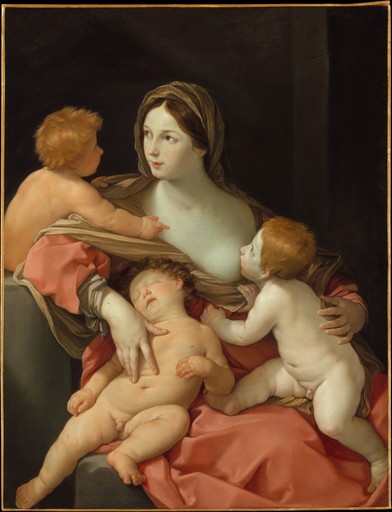
Baroque -- Dramatic Chiaroscuro (ArtFID 377.27)
The Baroque treatment intensifies the natural contrast between the blazing sunset sky and dark foreground elements. The chiaroscuro effect adds theatrical weight, transforming a pleasant sunset into a scene of visual drama.
| Original Photo | Style Reference | AI Generated Result |
|---|---|---|
|
 |
 |
| Source photo | Charity | ArtFID: 377.27 |
LPIPS: 0.5145 (content preservation) | FID: 248.11 (style fidelity) | Rating: 3 stars
Poussin -- Classical Landscape Composition (ArtFID 399.34)
Nicolas Poussin, the master of classical landscape composition, painted Arcadian scenes where nature itself became a theater for idealized beauty. His measured brushwork and harmonious color relationships bring structured elegance to sunset imagery, transforming atmospheric chaos into something balanced and timeless.
| Original Photo | Style Reference | AI Generated Result |
|---|---|---|
|
 |
 |
| Source photo | A Dance in the Country | ArtFID: 399.34 |
LPIPS: 0.4435 (content preservation) | FID: 275.64 (style fidelity) | Rating: 3 stars
Styles to Avoid for Sunsets (and Why)
Not every art style works with sunset photography. The ArtFID data reveals clear failures at the bottom of the rankings, and the reasons are rooted in frequency incompatibility.
| Style | ArtFID | Stars | Why It Fails |
|---|---|---|---|
| Realism | 533.38 | 1 | Attempts photographic fidelity, adds nothing to already-beautiful sunset light |
| Hogarth | 597.48 | 1 | Narrative detail and satirical line work clash with atmospheric abstraction |
| Rococo | 597.48 | 1 | Delicate ornamental textures fight against broad sunset gradients |
Realism (ArtFID 533.38) is a poor choice because the entire point of Realist painting is faithful reproduction of visual reality. A sunset photograph is already real -- applying a style that strives to look photographic adds no artistic transformation while introducing noise and artifacts from an unnecessary processing step.
Hogarth (ArtFID 597.48) relies on detailed narrative line work and satirical human observation. These high-frequency detail patterns are fundamentally incompatible with the broad, atmospheric color fields that define sunset imagery. The algorithm tries to impose fine engraving-like textures onto smooth gradients, producing results that look muddy and confused.
Rococo (ArtFID 597.48) might seem like it should work given its decorative beauty, but the style's characteristic delicate ornamentation -- the filigree, the pastel palette, the intricate surface patterns -- operates at frequencies far too high for sunset imagery. Instead of enhancing the sweep of a sunset sky, Rococo textures fragment it into fussy detail that undermines the scene's natural grandeur.
Cubism (ArtFID 436.96) also deserves caution. Its angular fragmentation deconstructs three-dimensional space into overlapping geometric planes, shattering the smooth gradients and atmospheric depth that make sunset photography compelling. A sunset demands continuity; Cubism insists on disruption.
Photography Tips for Better Sunsets Style Transfer
The quality of your style transfer output depends heavily on the input photograph. These techniques are specific to sunset shooting and maximize compatibility with the top-ranked styles.
Shoot during the full golden hour progression. Do not limit yourself to the moment the sun touches the horizon. The twenty minutes before and after produce the richest gradient data -- long, warm transitions from gold through orange to deep crimson that give the neural network abundant low-frequency information to work with. Turner himself was "more concerned with visual appearances and especially with fleeting effects of light" (History of Art, p.496), and the same principle applies to your source photography.
Compose with strong silhouettes. Trees, buildings, mountains, or human figures as dark foreground shapes create the tonal contrast that art styles like Baroque and Ukiyo-e amplify beautifully. Silhouettes provide clear structural anchors that the algorithm preserves even under heavy stylization.
Include foreground interest. A sunset sky alone can produce a visually monotonous transfer -- the algorithm has only gradients to work with, no structural variety. Adding foreground elements like water reflections, textured terrain, or architectural silhouettes gives the style transfer richer compositional material.
Protect your highlight gradients. Overexposed sunsets with blown-out white areas contain zero gradient information in the brightest regions. Expose slightly for the highlights to retain the full color transition from warm center to cooler edges. This gradient data is precisely what Impressionism and Van Gogh style transfers use to create their most compelling effects.
Capture cloud structures. Clouds at sunset become the primary canvas for style transfer. Dramatic cumulus formations, wispy cirrus streaks, or layered stratocumulus all provide distinct structural patterns that different art styles interpret in unique ways. A completely clear sky produces less interesting results.
Shoot across water when possible. Water surfaces reflecting sunset colors effectively double your gradient data and create a natural mirror composition. Impressionism and Monet styles in particular benefit from water reflections, which they transform into shimmering mosaics of broken color.
How to Apply (3 Steps)
Transforming your sunset photos into painted artwork takes less than a minute with ArtRobot's AI style transfer engine:
Step 1: Upload your sunset photograph at artrobot.ai. Any standard image format works. For the richest results, use a high-resolution original shot during golden hour.
Step 2: Choose an art style from the rankings above. Start with Impressionism for the highest-rated results, try Ukiyo-e for graphic boldness, or explore Van Gogh for emotional intensity.
Step 3: Download your stylized artwork in up to 4K resolution. The AI generates your result in seconds. Compare multiple styles to find the treatment that best matches your sunset's mood.
No software installation or design skills required.
Try Sunset Style Transfer Free on ArtRobot -->
FAQ
What is the best art style for sunsets photography?
Impressionism ranks first with an ArtFID score of 251.34 -- the best measured quality for sunset content. Its broken-color brushwork and emphasis on natural light align almost perfectly with the low-frequency warm gradients that define sunset photography. Ukiyo-e (ArtFID 302.71) and Early Renaissance (ArtFID 316.16) are also strong choices. See the complete ranking of art styles for sunsets for all tested options.
Why do some art styles work better for sunsets photos?
The answer lies in spatial frequency compatibility between the art style and the content image. Sunset photographs are dominated by low-frequency information: broad warm gradients, atmospheric glow, and smooth tonal transitions. Art styles whose texture patterns operate in compatible frequency ranges -- like Impressionism's flowing brushwork or Baroque's chiaroscuro -- produce harmonious results. Styles that impose incompatible high-frequency structures, like Rococo's ornamental filigree or Cubism's angular fragmentation, fight against the sunset's natural visual flow and produce poor ArtFID scores above 400.
How do I choose the right style for my sunsets photo?
Match the style to the mood and structure of your specific sunset photograph. For warm, serene golden-hour scenes, Impressionism captures the light beautifully. For dramatic sunsets with strong silhouettes and bold contrast, Baroque's chiaroscuro amplifies the drama. For graphic, poster-like impact, Ukiyo-e transforms sunset layers into striking flat-color compositions. Sunsets with prominent cloud formations work especially well with Van Gogh, whose swirling brushstrokes bring clouds to life. Try the sunsets Early Renaissance photo effect for a sacred, luminous quality.
What sunsets photos produce the best style transfer results?
The strongest results come from sunset photos with rich color gradients (not blown-out whites), clear silhouette elements in the foreground, and interesting cloud structures. Golden hour and the minutes just after sunset produce the warmest, most gradient-rich light. Photos that include water reflections perform especially well because they provide the algorithm with doubled gradient data and natural compositional balance. Avoid overexposed images where highlights have clipped to pure white -- that lost gradient information cannot be recovered during style transfer.
Can I apply multiple art styles to the same sunsets photo?
Yes, and comparing styles side by side is the best way to discover which treatment suits a particular sunset. The same photograph can become a shimmering Impressionist light study (ArtFID 251.34), a bold Ukiyo-e woodblock composition (ArtFID 302.71), or a dramatically lit Baroque scene (ArtFID 377.27). At ArtRobot, you can apply as many styles as you want and compare results instantly. The ArtFID rankings in this guide give you a data-driven starting point, but personal aesthetic preference ultimately determines the best choice for your specific image.
Try It Yourself
Transform your own photos into stunning paintings with 80+ artist styles. Free to start.