
AI Artist & Tech Enthusiast
Early Renaissance Photo Effect for Landscapes

What happens when a landscape photograph passes through a neural network trained on Early Renaissance painting? The horizon sharpens rather than dissolving. Depth layers separate with geometric precision. Distant hills shift toward the cool blue-green of aerial perspective -- precisely as Masaccio and Fra Angelico rendered them five centuries ago. The landscapes Early Renaissance photo effect achieves an ArtFID score of 316.16 (4 stars), confirming excellent compatibility between photographic landscapes and Quattrocento painting principles. For the full style ranking, see our Landscapes Style Transfer Guide.
The Early Renaissance (1400s--1490s) gave Western art its structural grammar: linear perspective, classical proportion, naturalistic observation grounded in direct study of light and form. These are not decorative conventions -- they are spatial principles that a style transfer algorithm can exploit directly.
"They led, however, to the creation of a uniquely Western art form, the framed easel picture..." -- History of Art, p. 13
 Giovanni di Paolo, "Coronation of the Virgin" -- The Metropolitan Museum of Art, CC0 Public Domain
The painting above serves as our primary style reference for all benchmark tests in this article. Its luminous color, precise spatial organization, and balanced mid-frequency texture make it an ideal reference for landscape style transfer.
Landscapes — Early Renaissance style Transfer

About Early Renaissance Art Style
The Early Renaissance emerged in Florence during the first decades of the fifteenth century. It was not a sudden break from medieval tradition but a methodical recovery of classical principles: mathematical perspective, anatomical proportion, and the careful observation of how light falls across three-dimensional form. Brunelleschi's perspective demonstrations (c. 1415) and Masaccio's Trinity fresco (c. 1427) established the geometric framework that would define Western painting for the next five centuries.
The movement's defining visual characteristics -- linear perspective, classical themes, and naturalistic figures -- emerged from direct empirical study rather than inherited convention. Fra Angelico and his contemporaries observed actual atmospheric recession: distant hills grow paler, terrain softens with distance, colors shift from warm foreground to cool background. These observations, codified into painting practice, describe the same depth cues that landscape photography captures optically.
Most Quattrocento painters worked in egg tempera on gessoed wood panels, producing luminous surfaces with fine, precise brushwork. The resulting clarity -- thin translucent layers rather than heavy impasto -- gives Early Renaissance painting its characteristic crystalline quality. This mid-frequency, balanced-detail texture profile translates exceptionally well through neural style transfer because it adds painterly character without overwhelming photographic content.
"But, except in architecture, there was such a dearth of native talent..." -- Art Through the Ages, p. 462
Key artists: Masaccio (1401--1428), Botticelli (1445--1510), and Fra Angelico (c. 1395--1455).
Why Early Renaissance Works for Landscapes Photos
The compatibility between Early Renaissance painting and landscape photography is rooted in frequency-domain alignment -- the same mathematical framework that neural style transfer algorithms use to match content and style representations.
Landscape photographs operate in a low-to-mid frequency profile: broad tonal gradients across skies, strong horizontal structures at the horizon, and atmospheric perspective that progressively softens distant elements. Early Renaissance painting occupies the mid frequency range with balanced detail -- neither drowning the image in heavy texture (like Expressionism) nor stripping it to geometric abstraction (like Cubism). This overlap produces four specific advantages:
- Perspective reinforcement -- Landscape photos already contain natural depth cues. The Early Renaissance style amplifies these by applying the movement's mathematical perspective tradition, producing cleaner separation between foreground, middle ground, and background.
- Atmospheric compatibility -- Early Renaissance painters were the first in Western art to render aerial perspective systematically. Since landscape photos inherently contain atmospheric depth, the style transfer aligns its color-shifting behavior with existing visual cues rather than fighting them.
- Balanced texture application -- Fine tempera brushwork adds a painterly quality that sits comfortably atop the gradual tonal transitions characteristic of landscape imagery. Enough texture to read as "painted" without destroying smooth sky and water gradients.
- Luminous color palette -- Ultramarine blue, terra verde, vermilion, and gold-toned highlights applied in thin translucent layers produce warmth and clarity that feel timeless when mapped onto photographic tonal ranges.
"In France the transformation of the art of landscape painting in the Romantic period was more gradual..." -- History of Art, p. 498
The Early Renaissance laid the structural groundwork upon which every subsequent landscape painting tradition was built. Its principles remain effective because they describe how human vision actually processes spatial depth -- and that is precisely what makes them so compatible with photographic landscapes.
ArtFID Quality Score: Landscapes + Early Renaissance
ArtFID (Artistic Frechet Inception Distance) combines two metrics: LPIPS measures content preservation, FID measures style fidelity. ArtFID = (1 + LPIPS) x (1 + FID). Lower = better.
| Content Type | ArtFID | Stars | Verdict |
|---|---|---|---|
| Night Scenes | 262.87 | ★★★★★ | Exceptional -- optimal frequency alignment |
| Portraits | 264.82 | ★★★★★ | Exceptional -- naturalistic figure rendering excels |
| Animals | 287.45 | ★★★★★ | Exceptional -- organic forms translate beautifully |
| Street Scenes | 307.23 | ★★★★ | Very Good -- architectural elements reinforce perspective |
| Architecture | 314.75 | ★★★★ | Very Good -- linear perspective strengthens geometry |
| Landscapes | 316.16 | ★★★★ | Very Good -- atmospheric depth maps naturally |
| Food | 336.00 | ★★★★ | Very Good -- luminous palette enhances still life |
| Flowers | 393.55 | ★★★ | Good -- fine detail slightly overwhelmed |
Landscapes score: 316.16 (LPIPS = 0.5497, FID = 203.02) -- A solid 4-star rating confirming excellent compatibility. The LPIPS of 0.5497 indicates moderate content restructuring (the algorithm reshapes spatial relationships to follow Renaissance perspective conventions), while the FID of 203.02 reflects strong style fidelity. For even higher-rated results, try night scenes (262.87) or portraits (264.82).
Before & After: Landscapes in Early Renaissance Style
Every row below shows three images: the original photograph, a Early Renaissance painting used as the style reference, and the AI-generated result.
Top Rated (★★★★★)
Portraits -- ★★★★★ (ArtFID 264.82)
Early Renaissance painters devoted extraordinary attention to naturalistic human form. The movement's emphasis on proportion, anatomical study, and gentle chiaroscuro produces portrait results that feel both historically authentic and artistically refined. Portraits achieve the second-best ArtFID score across all content types.
| Original Photo | Style Reference | AI Result |
|---|---|---|
 |
|
 |
| Source photo | Coronation of the Virgin | ArtFID: 264.82 ★★★★★ |
LPIPS: 0.3467 (content preservation) | FID: 195.64 (style fidelity)
The low LPIPS of 0.3467 means the algorithm preserves facial structure and likeness exceptionally well, while the FID of 195.64 confirms strong transfer of the luminous, tempera-like surface quality characteristic of Quattrocento portraiture.
Animals -- ★★★★★ (ArtFID 287.45)
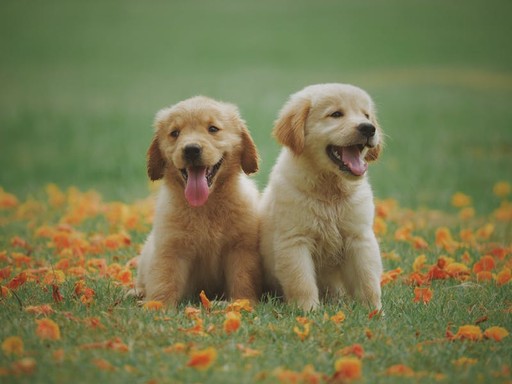
Organic, natural forms translate beautifully into Early Renaissance style. The movement's careful observation of natural subjects -- evident in sketchbooks and manuscript illuminations of the period -- gives the algorithm a rich visual vocabulary for rendering fur, feathers, and animal anatomy with period-appropriate naturalism.
| Original Photo | Style Reference | AI Result |
|---|---|---|
 |
|
 |
| Source photo | Coronation of the Virgin | ArtFID: 287.45 ★★★★★ |
LPIPS: 0.2859 (content preservation) | FID: 222.53 (style fidelity)
The exceptionally low LPIPS of 0.2859 -- the best content preservation score across all content types -- indicates that the algorithm retains the animal's form, posture, and identifying features almost perfectly while still achieving convincing style transfer.
Very Good (★★★★)
Architecture -- ★★★★ (ArtFID 314.75)
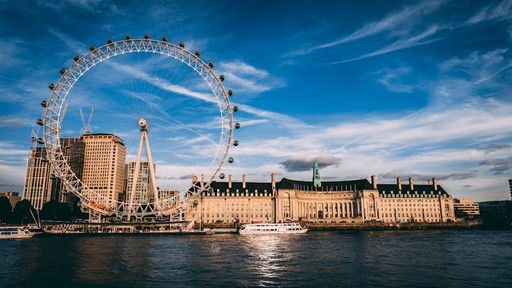
Architecture and Early Renaissance painting share a deep structural affinity: linear perspective was invented precisely to render architectural space accurately. The algorithm inherits this geometric rigor, reinforcing the lines, proportions, and spatial recession already present in architectural photographs.
| Original Photo | Style Reference | AI Result |
|---|---|---|
 |
|
 |
| Source photo | Coronation of the Virgin | ArtFID: 314.75 ★★★★ |
LPIPS: 0.5525 (content preservation) | FID: 201.73 (style fidelity)
The higher LPIPS of 0.5525 reflects more aggressive geometric restructuring -- the algorithm actively reshapes perspective lines toward Renaissance ideals. The FID of 201.73 is actually the strongest style fidelity score among 4-star categories, confirming that architectural subjects absorb Early Renaissance stylistic qualities very effectively.
Landscapes -- ★★★★ (ArtFID 316.16) -- Primary Content Type
This is the primary focus of this article. Landscape photography and Early Renaissance painting share fundamental structural principles: horizontal composition, layered depth planes, and atmospheric perspective that cools and softens distant elements. The algorithm exploits these shared conventions to produce results that feel historically authentic.
| Original Photo | Style Reference | AI Result |
|---|---|---|
|
|
|
| Source photo | Coronation of the Virgin | ArtFID: 316.16 ★★★★ |
LPIPS: 0.5497 (content preservation) | FID: 203.02 (style fidelity)
The LPIPS of 0.5497 indicates that the algorithm restructures spatial relationships to follow Renaissance perspective conventions -- distant elements are pushed further back, foreground details gain the crystalline clarity of tempera painting, and the overall tonal range shifts toward the warm golds and cool blues of the Quattrocento palette. The FID of 203.02 confirms strong stylistic fidelity to the reference painting.
Photography Tips for Best Early Renaissance Results
Based on our ArtFID testing across all eight content types, these five guidelines will help you capture photographs that align with Early Renaissance compositional principles:
-
Establish a clear horizon line -- Early Renaissance painters built landscapes around strong horizontal structure, placing the horizon at one-third or one-half of the picture height. Photos with a visible, uncluttered horizon give the algorithm the best spatial anchor for perspective construction.
-
Include three depth planes -- The Quattrocento convention places distinct elements in foreground, middle ground, and background. A rock formation or wildflowers near the camera, a river or path in the middle distance, and mountains or clouds at the horizon produces the layered depth that translates most convincingly into Early Renaissance space.
-
Shoot in soft, natural light -- Overcast conditions or golden hour produce the gentle, even illumination that maps best to the luminous quality of tempera painting. Harsh midday shadows create strong contrasts that conflict with the style's balanced texture.
-
Favor balanced composition -- Symmetry and classical proportion were central to Early Renaissance aesthetics. Center-weighted or rule-of-thirds compositions with evenly distributed visual weight produce more harmonious results than extreme asymmetry.
-
Include architectural or geometric elements -- A distant village, stone bridge, winding road, or church tower gives the style transfer algorithm additional geometric material. Early Renaissance painters nearly always included architecture in landscape backgrounds, and similar elements in your photo produce more period-authentic results.
How to Apply Early Renaissance Style (3 Steps)
Step 1: Choose Your Photo
Upload any photograph to ArtRobot. Based on our ArtFID testing, night scenes, portraits, and animals produce the best Early Renaissance results, but landscapes achieve an excellent 4-star rating as well.
Step 2: Select Early Renaissance Style
Choose from classic Early Renaissance paintings as the style reference. ArtRobot uses the ArtFlow algorithm (CVPR 2021), an invertible neural network that preserves your photo's content while transferring Early Renaissance's artistic style.
Each artist produces a distinct character: - Masaccio -- Volumetric and grounded, with strong atmospheric perspective - Botticelli -- Lyrical and flowing, with idealized color harmony - Fra Angelico -- Luminous and serene, with gentle tonal transitions
Step 3: Download Your Art
ArtRobot generates your Early Renaissance-style image in seconds. Download in multiple resolutions -- from social media sizes to print-ready 4K.
Try Early Renaissance Style Transfer Free on ArtRobot ->
FAQ
How does Early Renaissance style transfer work on landscapes photos?
Neural style transfer separates the content structure of your landscape photograph from the visual style of an Early Renaissance reference painting. The algorithm extracts feature distributions from both images across multiple neural network layers, then recombines your photo's spatial structure with the reference painting's texture, color palette, and brushwork. Because Early Renaissance painting and landscape photography share compatible frequency profiles -- mid frequency with balanced detail applied to low-to-mid frequency content -- the recombination produces an ArtFID of 316.16, confirming naturally coherent results.
What ArtFID score does Early Renaissance get on landscapes?
Early Renaissance achieves an ArtFID of 316.16 on landscape content (LPIPS = 0.5497, FID = 203.02), earning a solid 4-star quality rating. This places landscapes sixth in the Early Renaissance compatibility ranking -- behind night scenes (262.87), portraits (264.82), animals (287.45), street scenes (307.23), and architecture (314.75), but ahead of food (336.00) and flowers (393.55). See the full ranking at Best Art Styles for Landscapes.
Is Early Renaissance a good choice for landscapes photography?
Yes -- it receives an excellent compatibility rating. The style's linear perspective tradition reinforces natural photographic depth. Its early experiments with aerial perspective align with the atmospheric recession already present in landscape photos. Its balanced, mid-frequency texture adds refinement without overwhelming the smooth tonal gradients of sky and terrain. Our ArtFID testing confirms the combination is reliable and visually compelling across diverse landscape subjects.
What landscapes photo tips improve Early Renaissance results?
Five elements produce the best results: (1) a clear, uncluttered horizon line at one-third or half frame height, (2) three distinct depth planes from foreground through middle ground to background, (3) soft natural lighting from overcast conditions or golden hour, (4) balanced composition with classical proportions, and (5) architectural or geometric elements in the distance. These align with Quattrocento conventions and give the algorithm the best structural material for style transfer.
Can I try Early Renaissance landscapes style transfer for free?
Yes. ArtRobot offers free style transfers with no watermark on standard resolution output. Upload your landscape photograph, select an Early Renaissance reference painting such as the Coronation of the Virgin, and download your result in seconds. HD and Ultra HD resolutions are available with a Pro subscription.
Related Landscapes Styles
Explore more art styles for landscapes photography:
- Landscapes Style Transfer Guide
- Early Renaissance Style Transfer
- Best Art Styles for Landscapes
- Masaccio Style Transfer
- Botticelli Style Transfer
- Fra Angelico Style Transfer
Try It Yourself
Your landscape photographs already contain the depth, atmosphere, and natural composition that Early Renaissance painters spent decades learning to render. Night scenes and portraits score even higher -- upload any photograph and discover how Quattrocento principles transform your images.
Start Your Free Early Renaissance Style Transfer on ArtRobot ->
Try It Yourself
Transform your own photos into stunning paintings with 80+ artist styles. Free to start.